

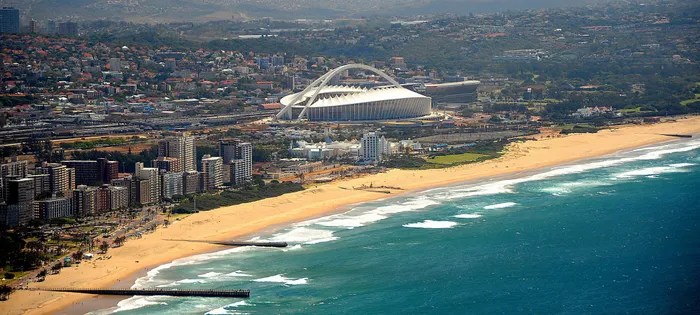
Every 13 international arrivals, on average, create one job somewhere in the economy, say the writers.
Image: File Picture
THE tourism industry in South Africa entered 2026 at an all-time high. Patricia de Lille, the Minister of Tourism, announced last month that the nation received 10,48 million foreign visitors in 2025, setting a record that exceeded even pre-pandemic numbers and represented a 17,6% increase over 2024.
Every 13 international arrivals, on average, create one job somewhere in the economy. Against this backdrop of genuine momentum, Finance Minister Enoch Godongwana tabled the 2026 national Budget. For an industry as tax-sensitive and consumer-dependent as tourism, the Budget carries implications that go well beyond the Department of Tourism's own allocation.
The Department of Tourism's approximately R2,6 billion budget, set against a sector that contributed an estimated R241 billion to GDP in 2024, represents a return on public investment of well over 90 times. Put differently, the government is getting an extraordinary economic return from a relatively modest departmental investment, which also raises the question of whether the allocation is commensurate with the sector's growth potential.
Tourism falls under the broader economic development budget, which receives R283,9 billion in 2026/27, the fastest-growing spending category at 5,8% per year. A significant portion goes toward energy, transport, roads and logistics, all of which directly shape the visitor experience. Most notably, load-shedding, which hurt hotel occupancies, raised costs for operators and damaged South Africa's reputation abroad, appears to be receding.
If energy stability holds, it would be one of the most positive developments the tourism industry has seen in years. Tourism is a tax-intensive industry. The single most consequential tax decision for tourism in this Budget was one that did not happen. After the political turmoil of 2025, during which a proposed VAT increase triggered a constitutional crisis, resulted in the first national Budget in democratic South Africa's history not being passed, and required three separate Budget presentations, the 2026 Budget firmly closes the door on any VAT increase.
VAT remains at 15%. For accommodation providers, restaurants, tour operators and travel agents, this removes a significant cloud of uncertainty. A VAT hike would have driven up the cost of the South African tourism product in international markets at precisely the moment the country is gaining competitive traction. The VAT registration threshold for small businesses has also been increased, from R1 million to R2,3 million, the first adjustment in 17 years.
For the thousands of SMMEs that form the backbone of community and township tourism, this is meaningful relief. Operators below the new threshold are no longer burdened with VAT compliance costs, freeing up administrative resources for service delivery and growth. For the first time in three years, personal income tax brackets and medical tax credits have been fully adjusted for inflation. Meaning that South African households retain more of their disposable income.
Individuals earning R8,250 or less per month will pay no income tax at all under the new thresholds. The tourism industry is heavily dependent on domestic consumer spending. When working South Africans have more disposable income, even marginally, they are more likely to take a weekend break, book a game lodge or take the family to the coast. The bracket adjustment, while modest in individual terms, is directionally positive for the domestic tourism market.
The 2026–2027 Budget for South Africa shows a government balancing growth stimulus and fiscal restraint. With GDP forecast at just 1,6% for 2026, well below the 5% many economists argue is needed to make a structural dent in unemployment, the search for growth sectors that can deliver jobs at scale is urgent.
Tourism is one of the clearest answers available. The sector already employs 1,8 million people, contributes nearly 9% of GDP, and is projected by the World Travel and Tourism Council to grow its total contribution to around 10,3% of GDP and add a further 620,000 jobs by 2034. South Africa has been named Africa's top tourism destination for 2025, from Cape Town’s coastline to Limpopo’s wildlife reserves and KwaZulu-Natal’s cultural heritage routes.
If economic confidence continues to build, tourism could once again become one of the country’s strongest engines of job creation.
The Tourism Amendment Bill, which aims to enforce grading standards and regulate short-term rentals, is still pending. Its approval during the current legislative session would indicate a more determined effort to modernise the regulations the industry requires.
South Africa's tourism industry enters 2026 in the best position it has been in since before the pandemic. Record arrivals, growing domestic consumption, an award-winning destination profile and a Budget that, for once, does not actively harm the sector. That is worth acknowledging. But record arrivals do not automatically translate into record economic impact if infrastructure constraints, safety concerns, regulatory uncertainty and underfunding of destination marketing persist.
The 2026 Budget lays a broadly supportive foundation. The sector's job now is to ensure that foundation is built upon to ensure that South Africa remains one of the world's most compelling destinations. The numbers are pointing in the right direction. The question is whether the ambition matches them.
Shireen Eraman and Raeesa Kader are academics at Mancosa.
** The views expressed do not necessarily reflect the views of IOL or Independent Media.