

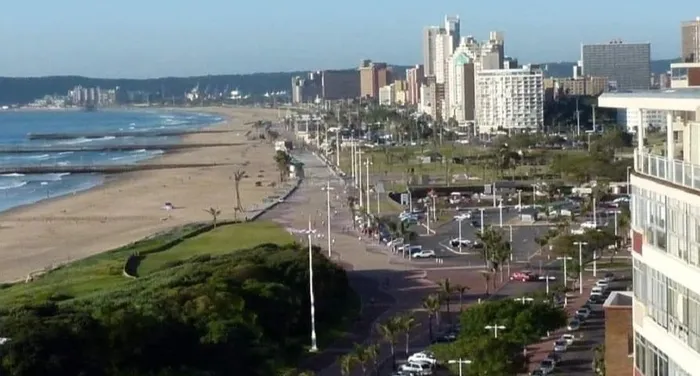
The Golden Mile Promenade along Durban’s beachfront.
Image: Facebook
WITH the Easter break approaching, many South Africans are planning short getaways to relax, explore, and reconnect with friends and family. For some, the prospect of a long weekend or school holiday is the perfect opportunity to experience new sights and flavours, immerse themselves in nature, or simply recharge away from urban life.
However, the recent announcement by FlySafair introducing a fuel surcharge has sparked concerns about rising domestic travel costs. Headlines highlighting higher airfare may give the impression that travel plans are now unaffordable, yet for destinations like KwaZulu-Natal (KZN), this development should not be seen as a deterrent. In fact, the region’s wealth of accessible experiences, many of which require little or no additional transport once visitors arrive, positions it uniquely to maintain vibrant tourism activity over Easter and beyond.
Rather than framing airline surcharges as a setback, tourism stakeholders in KZN can encourage visitors to embrace slow tourism, a concept gaining traction globally. Slow tourism prioritises meaningful, immersive experiences over rapid movement between destinations. It involves walking routes, local cultural engagement, and mindful exploration of nearby communities. By adopting this approach, travellers can reduce dependence on fuel-intensive travel while discovering the richness of KZN’s landscapes, heritage, and gastronomy.
Fuel price volatility is not unique to South Africa; it affects aviation worldwide. Airlines adjust pricing structures to remain financially viable, yet these changes do not necessarily diminish the quality or value of experiences at the destination itself. Durban and its surrounding areas, in particular, enjoy a significant advantage: a compact coastal landscape packed with attractions that are often walkable or connected via short, affordable public transport options. Unlike destinations where travel between experiences requires long drives or transfers, many of KZN’s most iconic sites are within easy reach of one another, allowing visitors to enjoy a full itinerary without incurring additional transport costs.
The Golden Mile Promenade along Durban’s beachfront is a prime example of this accessibility. Stretching several kilometres along the coast, this pedestrian-friendly space offers an Easter holiday experience rich in variety. Visitors can stroll along the sandy beaches, take in views of the Indian Ocean, and explore vibrant local markets, restaurants, and cafés. Landmarks such as uShaka Marine World and the Moses Mabhida Stadium are within easy reach, providing options for entertainment, photography, and family-friendly outings.
Similarly, the nearby Umhlanga Promenade traces the coastline to the historic Umhlanga Lighthouse, offering ocean vistas, shaded walking sections, and inviting stops for coffee or ice cream. These routes demonstrate that memorable, engaging experiences often require only a willingness to slow down, walk, and connect with the immediate environment.
Walking tourism also delivers significant health benefits, adding another dimension to travel in KZN. Leisurely exploration of the beachfront, heritage districts, or scenic promenades can help visitors reach recommended daily activity levels, often without them even realising. A morning walk along the Golden Mile, followed by an afternoon heritage stroll through the city centre, can easily accumulate the widely recommended benchmark of 10,000 steps per day, combining sightseeing with physical activity.
For travellers who track their wellness through fitness apps or health reward programmes, these activities may translate into tangible health points, transforming a holiday into a holistic wellness experience. In this sense, tourism in KZN can promote physical wellbeing alongside cultural and environmental engagement.
Durban’s historic city centre is another underutilised resource for walking tourism. The city boasts a rich architectural and cultural tapestry, shaped by colonial, Indian, and African influences. Guided heritage tours connect landmarks such as Durban City Hall, the Victoria Street Market, and the iconic Berea district, enabling visitors to experience the city’s layered history firsthand. Street food stalls, artisan shops, and small family-run cafés along these routes provide opportunities to support local businesses, inject money directly into the urban economy, and encourage urban regeneration. For visitors, this offers a more intimate, authentic experience than simply passing through major tourist hubs by car.
Beyond Durban, KZN’s diverse natural and cultural landscapes are well-suited for accessible exploration. The Valley of a Thousand Hills, located just a short drive from the city, offers walking trails, scenic viewpoints, and community-based cultural experiences such as craft markets and traditional dining. The Midlands Meander provides another example, where clusters of artisan shops, nature reserves, and craft breweries are interspersed along walkable sections of road, encouraging visitors to explore at their own pace. Even the Drakensberg mountains, a UNESCO World Heritage site, offer guided walking and hiking experiences of varying lengths and difficulty levels, demonstrating that the region caters to both leisurely and adventurous travellers.
Global trends show that travellers increasingly seek “slow tourism” experiences that prioritise quality, engagement, and sustainability over speed and convenience. KwaZulu-Natal’s warm weather, rich cultural heritage, and natural beauty make it an ideal region to adopt this approach. Ironically, the introduction of airline fuel surcharges may accelerate this transition, nudging visitors to spend more time in one location rather than hopping between destinations quickly. This shift can foster deeper connections between travellers and the communities they visit, encouraging longer stays, higher local spend, and greater appreciation for sustainable practices.
To capitalise on these opportunities, collaboration between tourism authorities, municipalities, and private businesses is critical. Clear signage and well-maintained walking routes, guided tours, digital mapping tools, and eco-conscious campaigns can all help position Durban and KZN as accessible, walkable destinations. Promoting pedestrian-friendly streets, cultural walking experiences, and safe public transport options will not only enhance visitor satisfaction but also strengthen KZN’s brand as a forward-thinking, sustainable tourism hub.
As Easter approaches, it is evident that the region’s tourism sector is resilient. From the bustling beachfront of Durban to the serene landscapes of the Valley of a Thousand Hills, KZN invites visitors to slow down, engage with the environment, and experience its culture, heritage, and natural beauty firsthand. Rising airline costs, while inconvenient, need not overshadow the many accessible, high-value experiences available within the province. By embracing walking tourism, cultural immersion, and mindful exploration, KZN has the potential not only to weather short-term challenges but also to set a model for sustainable, resilient tourism in South Africa and beyond.
The introduction of airline fuel surcharges should be viewed not as a barrier but as an invitation: an opportunity to shift focus from rapid, cost-driven travel to experiences that nurture the mind, body, and spirit. KwaZulu-Natal, with its walkable cities, scenic vistas, and rich cultural landscape, is ready to lead this movement. As travellers take to the promenades, markets, and heritage trails, they discover that sometimes the simplest, slowest journeys yield the richest rewards.

Shireen Eraman
Image: Supplied
Shireen Eraman: Tourism Academic Programme Leader: MANCOSA
** The views expressed do not necessarily reflect the views of IOL or Independent Media.