
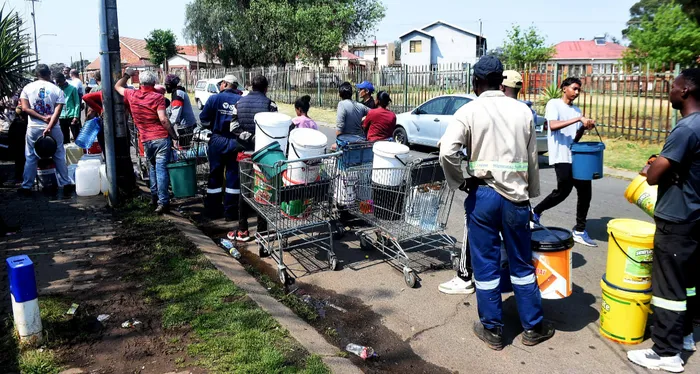
“The President is forming a National Water Crisis Committee. And he will chair it himself. So now, if your tap is dry, don’t phone the municipality. Phone the Presidency!”
Image: Itumeleng English / Independent Newspapers
SO, I MISSED the State of the Nation Address (Sona) on February 12.
Look, it was hot in Durban. Not the nice, nostalgic kind of hot. The kind of hot that makes you lie very still and question every life choice that led you here. By the time the president started talking, I was horizontal and fully committed to doing absolutely nothing.
Enter Ranjith.
Ranjith does not summarise things. He re-enacts them. He walked into my office the next morning, dramatically loosened his tie like he was in a Bollywood thriller, and announced: “Jerald, you missed Sona? Don’t worry. I’ll explain.”
He raised his finger like a professor who’s been waiting his whole life for this moment.
“In Hindi, sona means three things. Gold. To sleep. And darling. And this year’s Sona was all three.”
I sat back. This man deserves his own TV show.
“First meaning,” he said, “gold. And the president brought gold. Not the kind you wear around your neck. Policy gold.”
Ranjith rattled off stats like a Chatsworth jeweller before Diwali. Four quarters of GDP growth. Inflation at a 20-year low. Load shedding finished. The rand behaving. JSE shining.
“For the first time in years,” he said, “we are not just trying not to die. We are talking about growth. Infrastructure of R1 trillion over three years. That’s not spare change under the car seat.”
Renewable energy: 40% by 2030. Rail and ports opening up. High-speed rail plans. R2 trillion investment target. Small business support. Agriculture. Green vehicle incentives.
He looked at me solemnly. “This is not copper, Jerald. This is gold-plated ambition.”
Then he paused. “Of course, gold must be refined. If you dig it out and just stare at it, it’s still a rock. Implementation, my friend. That is the refinery.”
But still. His voice had hope.
“For the first time in a long time, I feel like we’re not just fixing potholes. We’re paving highways.”
He clasped his hands, closed his eyes like a man in deep meditation.
“Second meaning,” he whispered, “to sleep.”
I apologised again for snoozing through the speech. He waved his hand. “No, no. This Sona was not a sleep Sona. The president was saying: South Africa, wake up.”
He sat forward. Crime and corruption. Organised crime as the biggest threat. Gangs. Illegal mining. Corrupt cops. Water crisis. Broken municipalities.
Then he dropped this gem: “Water is now more dangerous than load shedding, Jerald. When taps run dry, people run wild.”
But here’s where Ranjith really hit his stride.
“The president is forming a national water crisis committee. And he will chair it himself. So now, if your tap is dry, don’t phone the municipality. Phone the presidency.”
He laughed. Then got serious.
“SANDF deployed. More police. Lifestyle audits. Whistle-blower protection. Criminal charges for failing municipalities.”
He pointed at me.
“For too long, we were in a national siesta. We complained. We tweeted. We braaied. We slept. Now the message is clear: no more sleepwalking. Either we fix the system, or the system fixes us.”
Then he added, with surgical precision: “And don’t think you can nap through democracy like you napped through Sona.”
Ouch.
Then his face softened.
“Third meaning,” he smiled. “Darling.”
He reminded me the president opened with the women of 1956, the youth of 1976, the Constitution of 1996.
“This was not economics, Jerald. This was emotional. This was: South Africa, you are my darling. We’ve been through things, but we’re still here.”
He nodded approvingly at the list. Early childhood education. Compulsory Grade R. Skills training. Youth jobs. Ending child stunting by 2030. SRD grant continuing, but redesigned to help people work. Health infrastructure. HIV prevention injections. Digital IDs. MyMzansi.
“This is government saying: my people, my sona, I have not forgotten you.” Then the grin.
“Even small businesses are being called darling. R2.5 billion in funding. If every SME hires one person, that’s three million jobs. That’s not romance, Jerald. That’s arithmetic love.”
Then Ranjith shifted into sermon mode.
“Gold is valuable. Sleep is necessary. Darling is sweet. But none of them mean anything without action.”
He paused for effect.
“We have turned a corner. But if you turn a corner and just stand there admiring the view, you will be run over.”
He believes the country has stabilised.
“We survived state capture. We survived Covid. We survived riots. We survived floods. We survived Eskom drama that made soap operas look boring. And now? There is structure. There is planning. There is momentum.”
He admitted the usual suspects: unemployment, crime, inequality, dodgy municipalities.
“But I feel something different,” he said. “Confidence. Investors coming back. Infrastructure moving. Energy reform real. Ports improving. Not perfect. But moving.”
Then the flourish.
“This Sona was gold because it showed recovery. It was not sleep because it was a wake-up call. And it was darling because it reminded us this country, with all its noise and nonsense, still loves its people.”
He stood up to leave.
“And next year,” he called over his shoulder, “don’t let the heat defeat you. Democracy is not a spectator sport.”
I sat there after he left.
Maybe Sona 2026 wasn’t a miracle. Maybe it was just a steady turning of the wheel. A country trying, stumbling, refusing to give up on itself.
Gold doesn’t appear overnight. Sleep must end for work to begin. And a nation, like a darling, must be loved and told to get its act together at the same time.
If Ranjith is right, 2026 may not be the year we arrive.
But it might be the year we accelerate.
And in South Africa? That’s already saying something.
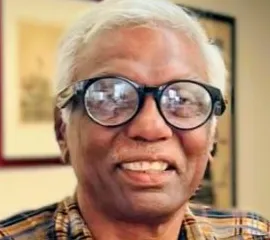
Jerald Vedan
Image: Supplied
Jerald Vedan is an attorney, community leader, and social commentator based in KwaZulu-Natal.
** The views expressed do not necessarily reflect the views of IOL or Independent Media