

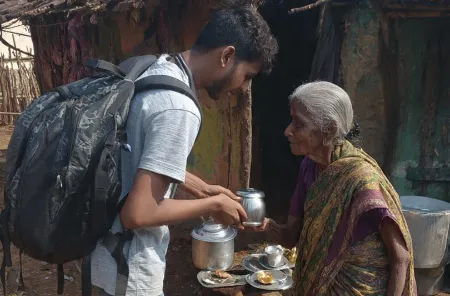
Some students delay or abandon post-secondary education to take on informal work, support extended family income, or provide care for younger siblings and elderly relatives in multigenerational households, says the writer.
Image: Meta AI
LIFE in South Africa often feels unusually demanding. Not because South Africans lack resilience or competence, but because everyday living has become an exercise in constant anticipation, adjustment and compensation. Simple tasks require extraordinary effort. Ordinary systems demand excessive planning. What should be routine often feels exhausting. This is not accidental. It is structural.
Few issues illustrate this structural strain more clearly than youth unemployment. South Africa has one of the highest youth unemployment rates in the world. According to Statistics South Africa, more than 60% of young people aged 15 to 24 are unemployed, while close to half of those aged 15 to 34 struggle to secure stable work. Behind these figures lie a deeper problem that begins long before young people enter the labour market.
The roots of youth unemployment in South Africa begin long before young people enter the labour market. They begin during the fragile transition from schooling to further education and work. Each year, large numbers of young South Africans leave school without successfully entering higher education, vocational training or employment. As a result, South Africa has one of the highest proportions of young people classified as Neet (not in employment, education, or training).
Recent estimates suggest that more than 40% of young people aged 15 to 34 fall into this category, representing millions of individuals whose potential remains largely untapped. For many young people, the barriers are not simply academic or financial. Higher education often remains out of reach due to broader social and economic realities that shape household survival. Even where financial support programmes such as the National Student Financial Aid Scheme (Nsfas) provide tuition assistance, many young people cannot realistically commit to sustained participation in further education. In economically-vulnerable households, young adults are frequently expected to contribute immediately to family survival.
Some leave school early, while others delay or abandon post-secondary education to take on informal work, support extended family income, or provide care for younger siblings and elderly relatives in multigenerational households. In these circumstances, education becomes a deferred aspiration rather than an immediate pathway. Young people may intend to study later, but the demands of family survival often intervene first. Even those who manage to enter university face significant pressures.
South Africa has expanded access to higher education in recent decades, particularly for first-generation students from historically-disadvantaged communities. This access does not automatically translate into completion. Studies have shown that dropout rates remain high among first-generation university students, many of whom navigate financial uncertainty, unfamiliar institutional cultures, and ongoing family responsibilities while trying to succeed academically.
The result is a fragile and often interrupted pathway between education and employment. For many young South Africans, the journey into adulthood becomes less a transition and more a prolonged struggle to navigate fragmented opportunities, uncertain systems and competing responsibilities. This is not only a social concern. It is an economic one. When large numbers of young people remain excluded from education, training and stable employment, the country loses not only talent but future productivity.
A generation that should be building skills, innovation and economic momentum instead spends critical early years navigating uncertainty and survival. For many young people, navigating this uncertainty becomes a full-time mental exercise. Job applications are submitted repeatedly with little response. Recruitment processes stall without explanation. Opportunities appear sporadically and disappear quickly. Each attempt requires preparation, hope and adjustment. Each silence requires recalibration.
This invisible burden has a name. It is a mental load. Mental load is not simply stress or busyness. It is the constant cognitive labour of anticipating problems, compensating for gaps, and holding things together when systems do not function as they should. It is responsibility without authority, persistence without guarantee, and vigilance without relief. For many young South Africans, this mental load begins long before their careers do. It begins in the prolonged uncertainty between schooling, education and employment.
Instead of moving through a clear developmental pathway, many young people spend years navigating fragmented opportunities while balancing family responsibilities, informal work, and repeated attempts to re-enter education or training. What should be a structured transition into adulthood becomes a continuous process of adjustment. In response, South Africans often celebrate resilience. Young people are admired for their ability to persevere despite these conditions. They continue studying, volunteering, starting small businesses, and searching for opportunities even when pathways remain uncertain.
Resilience, when required constantly and systemically, comes at a cost. When individuals are forced to compensate continuously for structural shortcomings, the burden of failure quietly shifts from institutions to citizens. Instead of asking why education systems, training pathways and labour markets fail to align, we praise young people for surviving the misalignment. The result is a generation that is capable, educated and determined, but persistently exhausted.
This mental load does not disappear once employment is secured. Many young professionals carry the same pattern of constant adjustment into workplaces where systems are inefficient and processes unreliable. Significant energy is spent navigating bureaucracy, correcting errors, following up on stalled processes, and compensating for institutional shortcomings. In such environments, productivity becomes distorted. Being busy replaces being effective. Activity replaces progress. People are praised for how much they carry, rather than questioning why so much needs to be carried in the first place.
This is why life feels harder than it should be. It is not that South Africans lack ambition or effort. It is that individuals are carrying burdens that functioning systems should carry. Young people are navigating an education-to-employment transition that demands constant persistence without offering predictable pathways forward. Over time, this erodes confidence not only in institutions, but in the future itself. The danger is not only economic stagnation. It is resignation.
When a generation begins to accept that opportunity will always be scarce, and progress always uncertain, expectations shrink. Aspirations narrow. The collective imagination of what the country could become slowly fades. If South Africa is serious about progress, we must stop romanticising resilience, and begin interrogating why so much coping is required in the first place. Youth unemployment is not simply a labour market statistic. It is the outcome of an education and skills ecosystem that does not yet provide sufficient capacity, support and pathways for the millions of young people trying to build a future.
A society should not require constant heroism simply to enter adulthood. Until we confront the mental load imposed on young South Africans by systemic gaps in education, training and employment opportunity, life will continue to feel heavier than it needs to be. Not because our youth lack capability, but because they have been asked to carry far more than any generation should.
** The views expressed do not necessarily reflect the views of IOL or Independent Media.