
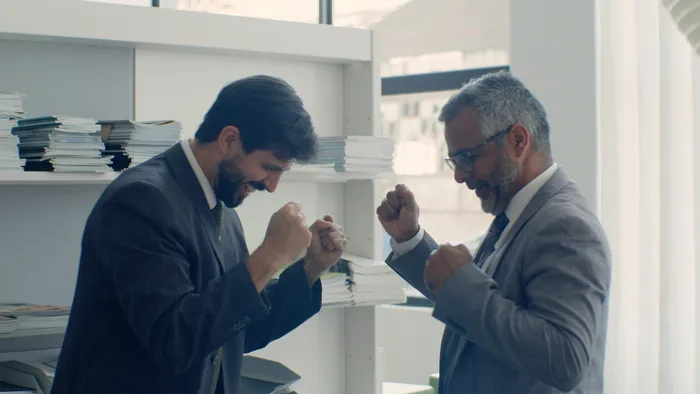
Young successors are often seen as “heirs” rather than architects of the future, says the writer.
Image: Kampus Production/Pexels.com
IMAGINE a lion raised under the watchful eyes of a dominant pride leader. He has inherited strength, access to abundance, and the legacy of a territory fiercely protected over generations. Despite his royal bloodline, the jungle doesn’t bend for legacy alone. It demands vision, agility and the courage to hunt.
This is the dilemma faced by many next-generation family businesses today. Groomed in the shade of their forefathers’ greatness, they now find themselves challenged by modern market dynamics, intergenerational power plays, and the psychological burden of “earning the crown”.
At a recent family business event a striking poll was conducted:
- 67% of next-generation family business entrants felt uncertain in their roles.
- Only 18% felt their talents were aligned with their responsibilities.
This is more than a data point; it’s a roar from the inside.
I have observed this situation arise internationally. Although elements such as business structure, share allocation, roles and organisational charts can be formally documented, the emotional dynamics often remain undefined.
Young successors are often seen as “heirs” rather than architects of the future. This is where emotional intelligence becomes pivotal. When a young eagle is taught to fly, it is nudged from the nest, not to fall, but to discover its wings.
In many families, heirs are wrapped in bubble wrap, suffocated under protectionism, or worse, tethered to the shadow of perfection. Legacy then becomes a burden rather than a launch pad.
These emotional tensions mirror the “three-circle model” often used in family business governance: family, ownership and business.
But I usually add a fourth invisible circle: unspoken expectations.
This is where the real jungle lives, where decisions are influenced more by loyalty than logic, where titles are given without clear KPIs, and where approval is often withheld like a scarce resource.
The lion pride teaches us about dominance, succession and legacy. But it also shows us that too much dominance weakens the collective, especially when the leader does not allow new blood to test the perimeter.
The eagle symbolises solitude and strategic vision. Eagles don’t flock; they soar.
In a family business, this teaches us the value of independent thinking, often stifled in highly collectivist cultures.
The elephant herd represents matriarchal wisdom and memory. In business families, we must listen to the "elephants in the room", often the women whose informal governance holds the emotional spine of the business.
When next-gens are only seen as lions-in-waiting and not eagles-in-flight, we confine their growth. When the only measure of success is replicating the founder, we suffocate innovation and breed silent rebellion.
Let’s return to that poll: 67% of next-gens feel uncertain or disempowered. What would a family business look like where this was reversed?
In the jungle, the throne is never guaranteed; it’s earned. In a family business, leadership is not about entitlement, but about enablement.
To the readers, whether you are the elephant, the eagle or the lion, remember this: a family business that evolves with empathy, strategy, and emotional clarity thrives across generations.
Ahmed Seedat is an author and family business expert consultant.