

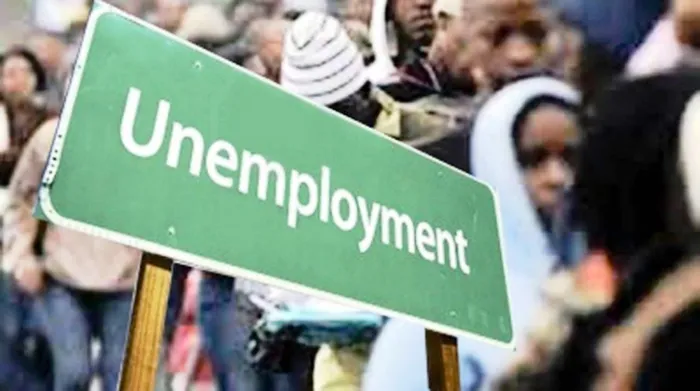
The biggest challenges lie in the levels of poverty, unemployment, inequality, violence and corruption, says the writer.
Image: File
SOUTH African society is characterised by the quest for human rights, human dignity and democratic governance as seen in past struggles against colonialism and the system of apartheid, and in contemporary post-apartheid and democratic South Africa.
It was the struggle for human rights, human dignity and democracy that culminated in the adoption of the Constitution by the Constitutional Assembly on May 8, 1996. During his address at the adoption of the Constitution, then president Nelson Mandela described the Constitution with its Bill of Rights as the “national soul” and a “national compact” with one another as citizens, and a “humble contribution to democracy and the culture of human rights worldwide”.
He added there was nothing that could justify the existence of government other than the redress of centuries of “unspeakable privations, by striving to eliminate poverty, illiteracy, homelessness and disease”.
These are all concerns that are central to the attainment of human dignity. The role of the Constitution and Bill of Rights has also been pronounced by the courts in many of their decisions, notably by the Constitutional Court in Qwelane v South African Human Rights Commission and Another (2021), wherein it stated: “We are enjoined by our Constitution to strive for a society built on the democratic values of human dignity, the achievement of equality, the advancement of human rights and freedom.”
The commemoration of 30 years since adoption presents an opportunity for reflection on how past injustices and the country’s human rights deficit have been addressed, including the progress made, and challenges and shortcomings encountered, in establishing a culture of respect for human rights.
Positives
Much has been done over the past 30 years to give effect to constitutional provisions, and to make human rights and human dignity a reality. At an institutional level, the establishment of the Constitutional Court and various constitutional and statutory bodies such as the South African Human Rights Commission, the Office of the Public Protector and the Commission for Gender Equality, were key to strengthening our constitutional democracy and the establishment of a human rights culture.
Numerous judgments of the Constitutional Court have been hailed as revolutionary in the context of South Africa’s legal system, as well as beyond our borders. Notable decisions include the declaration of the death penalty and corporal punishment as unconstitutional; and the declaration of socio-economic rights such as the rights of access to housing, education, health and social security as judicially enforceable.
Additionally, it has also declared certain laws passed by Parliament and decisions of and appointments made by the executive, including by various presidents of the country, unconstitutional. In these respects, the judiciary, led by the Constitutional Court, and in line with the oath or affirmation to uphold and protect the Constitution and human rights that judicial officers must take, has established itself as the pre-eminent upholder of the Constitution and protector of human rights.
Other constitutional and statutory bodies, despite several challenges, have made important contributions in the realisation of human rights through their various mandates.
The Electoral Commission, for example, has held free and fair elections over the past 30 years in the advancement of democracy. Parliament has passed several laws to promote human rights. These include: the Promotion of Equality and Prevention of Unfair Discrimination Act (PEPUDA) to address the issues of unfair discrimination and advance equality in the country; the Promotion of Access to Information Act (PAIA) to regulate the right of access to information to the public to hold the state and non-state entities to account; the Promotion of Administrative Justice Act (PAJA) to ensure that the exercise of public power is lawful, reasonable and procedurally fair; and the Protected Disclosures Act (PDA) to protect those who disclose wrongdoing, from victimisation.
A relatively conducive environment has been created for the media and civil society organisations to operate freely and without undue restrictions. For example, the independence of the SABC, with its nationwide reach in all official languages, enables citizens to be informed, and thus better enabled to hold government and officials to account.
Negatives
The many commendable advances, made in the entrenchment of democracy and human rights, could be undone if the numerous challenges and shortcomings are not addressed effectively and urgently. The biggest challenges lie in the levels of poverty, unemployment, inequality, violence and corruption. The inequality in the distribution of wealth that continues to reflect the racial and gender disparities of the past, counts as a failure to realise the aspiration of equality as a founding value of the post-apartheid South Africa.
Despite a progressive Constitution and other laws, the large majority of people are unable to access courts to address their human rights concerns, and to access basic and essential services, leaving many without adequate shelter and a secure food supply.
The billions of rand lost to corruption not only undermines the capacity and ability of the state to fulfil its responsibility of protecting and promoting human rights, but has also resulted in the decline in public trust in the state and its institutions, as witnessed in the diminishing numbers of eligible voters taking part in elections – a sad reality given that many South Africans fought and died for the right to vote and participate in public affairs.
These are the main failures of governance and leadership – the appointment of unsuitable and under-qualified people in key organs of state; the infiltration of criminal elements into key state institutions; and the victimisation and even assassination of whistle-blowers exposing corruption and other abuses of public power and resources. These failures suggest a democracy and a human rights regime that is in crisis.
In addition, persistent racism, xenophobia and rising right-wing mobilisation, often amplified via social media, are deepening division and undermining constitutional values. Misinformation, including claims of a so-called "white genocide", distorts reality, fuels tension and weakens trust in democratic institutions. The inability of law enforcement to rein in corrupt political and criminal networks, risks descent into lawlessness.
To avoid the collapse of the country’s democratic governance and its human rights regime, urgent and corrective action is needed in many key aspects. At an institutional level, there is a need to appoint committed and capable persons in key positions to ensure that the state can discharge its main mandate – the realisation of human rights.
The appointment of politically-connected individuals has not worked nor served the country and its citizens: failures in the local sphere of government and challenges in the SAPS as seen from revelations coming out of the hearings of the Madlanga Commission and the ad hoc committee of the National Assembly on the allegations made by General Nhlanhla Mkwanazi attest to this.
Some of the constitutional and statutory bodies established to protect and advance human rights have not been very effective, and a review of some of these bodies is needed to ensure their effectiveness. There is also a need to ensure that the courts are more accessible and effective in dispensing justice – the lack of institutional independence of the judiciary 30 years into the country’s democracy is a major concern.
At the legislative level, the reform of the whistle-blower legal framework is long overdue if the fight against corruption, and abuse of power and public resources, are to succeed. More important, however, is for ordinary South Africans across all walks of life to appreciate that the quest for democracy and human rights is a concern for all; and that there is a pressing need, as during the Struggle against apartheid, for everybody to join hands in this endeavour.
Civil society organisations such as the Active Citizens Movement (ACM) play a critical watchdog role, supporting whistle-blowers, countering misinformation, mobilising communities, and defending constitutional supremacy against efforts to elevate parliamentary power above the Constitution.
Thirty years after the adoption of the Constitution and its Bill of Rights, South Africa stands at a critical juncture. Inequality, corruption, misinformation and threats to constitutional supremacy persist. Defending the Constitutional Court, strengthening civil society, and promoting truth-based discourse are essential to making human dignity a lived reality for all.
What Mandela said, on December 10, 1996 in Sharpeville, at the signing of the Constitution, remains true today: there would be no lasting peace, no lasting security and no prosperity in South Africa until all enjoy human rights and fundamental freedoms meaningfully and equally. Greater efforts are thus necessary from both the government and citizens to address past and current challenges and shortfalls, to ensure that human rights and human dignity are enjoyed by all.
Advocate Tseliso Thipanyane
Image: SUPPLIED
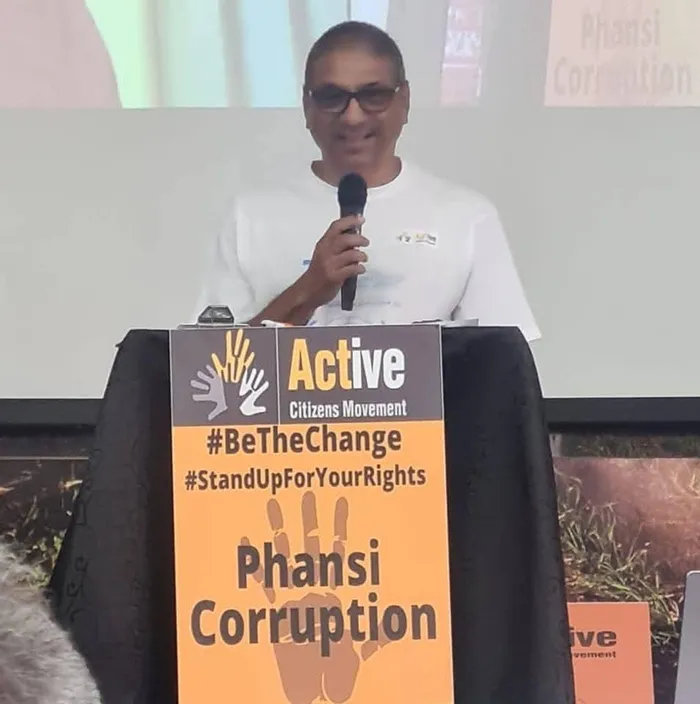
Pops Rampersad
Image: File
Advocate Tseliso Thipanyane and Pops Rampersad are members of the Active Citizens Movement (ACM).
** The views expressed do not necessarily reflect the views of IOL or Independent Media.