

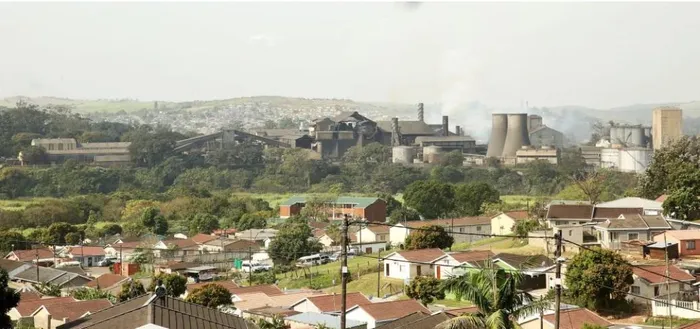
The Maidstone Mill today. We need to remind everyone involved that this is not just about saving a business. It is about honouring a contract between South Africa and the people who made it.
Image: File
THEY were not soft hands. They were thick, calloused, the skin cracked like the dry December earth before the rains came.
He would point to a knuckle, twisted at an odd angle, and say: “That one is from the cane knife.”
Another scar on his palm? “That is from the mill.”
He never complained. For him, those hands were a badge of honour. They were proof that he had built something.
Now, we are being told that what he and thousands like him built, Tongaat Hulett, might just be left to rot.
We talk about this sugar giant in boardrooms now, using cold words like “liquidation”, “secured debt”, and “business rescue”.
We hear about the billions of rand lost, the accounting scandals, the failed deals. But I worry we are forgetting what the company actually is.
It is not just a name on a stock exchange listing. It is a living, breathing monument to the people who carved it out of the KZN soil with their own hands.
Go back to 1860. When the ship Truro docked in Durban, it was not carrying bankers or CEOs.
It carried my ancestors, and yours. They did not come here to build an empire; they came to work. They cleared the thick bush with nothing, but muscle and determination.
They drained the swamps. They planted the first cane stalks.
The Tongaat Sugar Company grew because of the sweat that dripped off their brows.
For decades, the story was the same. Indentured labourers finished their contracts and became small-scale farmers, scratching a living from five or 10 acres of land.
They loaded that cane on to wagons with their own backs and carted it to the mill. They did not just work for the company; they were the company. They built the homes, the schools and the temples around the mill.
They built the very town of Tongaat. The sugar in your cup today is sweet because of the “blood and sweat” that was invested into those fields more than a century ago.
But if we only tell that part of the story, we are still missing a big piece of the truth.
The sugar industry in this province was not built by one group alone. It was built on the shoulders of many.
While my grandfather’s people were working the land as indentured labourers and later as small-scale farmers, African families in the rural areas were living a different but connected reality.
In places like the Umsunduze Valley, near the old Tongaat mills, African communities had been tending the land long before the first sugar cane was ever planted.
When the industry took off, they did not just vanish. They were pulled into its orbit.
Some came to work as labourers alongside the Indian migrants, cutting the same cane, sweating under the same sun. But many others played a role that was just as vital, even if it was different. As researchers have noted, in the Umsunduze Valley, Africans were not only working on the estates but were also deeply involved in growing their own cane.
They developed their own small-scale farming operations. They built their own irrigation systems –simple, but clever furrows that diverted water from the streams to nourish their crops.
And when it was time to get that cane to the mills, they provided the transport. They were the wagon-men, the oxen-drivers, the ones who knew the paths through the hills.
So, when we talk about the sweat that built Tongaat Hulett, we must be honest.
It was not just one colour of sweat, one language of labour. It was a mix. It was Indian and African, working the same soil, often for the same bosses, contributing to the same growing giant.
My grandfather’s story and the story of a family from the Umsunduze Valley are two sides of the same coin. Together, their hands and their backs turned a swampy stretch of coastline into the sugar bowl of the nation.
This is not just history. It is the present reality for 250,000 people whose jobs depend on this industry.
When the business rescue practitioners say the plan has failed, they are not just talking about a spreadsheet. They are talking about the 40,000 workers who face immediate joblessness. They are talking about the 16,000 small-scale growers, the descendants of those first farmers – both Indian and African – who will watch their cane rot in the fields because there is nowhere else to take it.
They are talking about the lady who sells apples and cool drinks outside the factory gates. Her livelihood dies with this company too.
Yes, the company is in trouble. Yes, there has been mismanagement. We can argue about who is to blame for the mess – the executives, the lenders, the market forces.
But we cannot punish the company by letting it die. Because punishing the company means punishing the communities that built it and sustained it for over 130 years. It means punishing a shared legacy.
I am glad to hear the government, from Minister of Trade, Industry and Competition, Parks Tau, to Premier Thami Ntuli, saying that liquidation must be a last resort. It must be.
This is not just another corporate failure; it is a potential national tragedy. You cannot simply wipe away an “anchor business” like this and expect the town, the farmers and the families to just “adjust”.
We need to remind everyone involved that this is not just about saving a business. It is about honouring a contract between South Africa and the people who made it. We must find a way. We must fight for every single job, every single farmer, every single family.
My grandfather is long gone now. But when I look at the sugar cane fields bending in the wind along the North Coast, I still see him. And now, I see the wagon-men from the Umsunduze Valley too. I see all the hands that built this place.
We cannot let their legacy, the legacy of thousands, be thrown away because we ran out of ideas. We must find a way to save Tongaat Hulett. Their blood is in that soil. Their sweat built those mills. We owe it to all of them to try.
Jerald Vedan
Image: Supplied
Jerald Vedan is an attorney, community leader, and social commentator based in KwaZulu-Natal.
** The views expressed do not necessarily reflect the views of IOL or Independent Media