


SOUTH Africa is experiencing an unprecedented surge in online gambling, leading to significant financial losses for low-income households.
Image: Supplied
SOUTH Africa is experiencing an unprecedented surge in online gambling, leading to significant financial losses for low-income households.
In the past decade, and especially since Covid-19, gambling has migrated from casinos and racetracks into the most intimate space imaginable: the smartphone.
There, in bedrooms, taxis, hostels and factories, fortunes are chased and quietly lost. This is not simply entertainment. It is one of the largest ongoing transfers of wealth from low-income households to corporate balance sheets in modern South African history.
The numbers are staggering. Legal gambling activity has exploded to levels once unimaginable.
According to some reports, the numbers are huge.
A decade ago, the industry was roughly half this size.
From this data set, it is clear that the growth is unmistakable: slow for years, then a near-vertical surge after 2019 as smartphones, cheap data and aggressive marketing converged.
Most of this growth comes not from casinos but from online sports betting, dominated by companies such as Hollywoodbets and Betway, now as present as banks or supermarkets.
But unlike banks though, they do not build savings. Unlike supermarkets, they do not provide necessities. They sell hope, priced to fail.
So what we now have is a casino in the pocket. What changed is not human nature but access. Gambling once required travel, cash and social exposure. Now it requires only a thumbprint. Modern betting apps are programmed for continuous engagement, almost habit forming. It allows for instant deposits, 24/7 availability and micro-bets during live matches. These tactics are the same as the attention-capture strategies used by platforms like TikTok and Instagram, but with serious money at stake. Physical venues, it has to be remembered, close after ‘business hours’. Apps do not. The result is not occasional gambling but almost permanent exposure.
Online betting booms have occurred in wealthy countries too. But South Africa combines risk factors rarely found together:
We have very high unemployment and extreme inequality. Add to this weak social safety nets and widespread smartphone penetration. Interestingly, countries like the UK and US dominated by firms such as Bet365, DraftKings and FanDuel, are already tightening regulation after public-health concerns. Yet their populations gamble with far higher disposable income. South Africans often do not.
In wealthy societies, gambling is leisure. In South Africa, for many, it is closer to a survival strategy. When jobs are scarce and upward mobility is blocked, a small bet offers something the labour market cannot: the possibility, however remote, of immediate change in fortunes. Economists describe the result as a negative transfer of wealth: money flows upward to the betting operators from those who can least afford it.
Now let’s consider the key indicators of harm. Gambling now absorbs a large share of household spending. When cash runs out, borrowing from family and friends, under mostly false pretences, to fund the gambling habit is common. Then it is known that losses disproportionately affect low-income groups. Also some research has shown that working men are the heaviest gamblers. Unlike education or business investment, gambling produces no assets, no skills and no future income. Its expected long-term return is negative.
Gamblers then get caught in a debt spiral. The most dangerous mechanism is not losing once; it is losing repeatedly.
A typical progression has followed this pattern:
Initial losses followed by attempt to recover through more betting; then borrowing or credit use is followed by escalating financial stress. This results in families suffering due to reduced spending on essentials. Money spent on betting is money not spent on food, transport, school needs or small businesses. Economists call this replacement: one sector grows by draining others. Over time, this erodes household survival and deepens inequality.
Betting is not designed for repeated wins. It is the illusion of winning. The industry’s public face is the winner, the lucky punter holding a giant cheque, the viral story of overnight riches. These stories are real. They are also very rare.
Gambling works precisely because most players lose slowly enough to keep playing. Small wins reinforce behaviour; near-misses create urgency; bonuses create the illusion of free money. Turnover figures in the trillions are misleading because much of the money is recycled winnings: in other words re-betting again and again. What remains is a steady flow of cash to operators.
For governments, this has become an unexpected tax windfall - with hidden costs.
Government benefits from gambling through licensing fees and taxes, creating an uncomfortable dependency. Restrict the industry and revenue falls; leave it unchecked and social damage mounts. But the apparent fiscal gain may be an illusion. The costs: food insecurity, indebtedness, mental-health strain and family conflict are borne privately by compromised households.
So now we have the quiet epidemic.
Unlike crime or unemployment, gambling losses are invisible -until it spills out in major family dysfunction. There are no protests when grocery money disappears into an app.
No statistics that capture the arguments behind closed doors, the skipped meals, the mounting and crippling informal loans. This invisibility makes the crisis politically easy to ignore. Yet its effects accumulate: weaker families, diminished prospects for children, and reduced social mobility.
These betting platforms sell hope and creates desperate despair. South Africa once confronted the social cost of alcohol abuse through regulation and public awareness. Online gambling has so far escaped comparable scrutiny, even as its reach expands into every corner of society. The central ethical question is stark:
Should companies be allowed to profit from a product whose harms fall most heavily on those already struggling to survive? In a country starved of opportunity, betting apps sell hope as a commodity. But hope that depends on financial loss is not hope at all; it is providing a spade to some to dig themselves deeper into an almost inextricable hole.
South Africa’s new gold rush is not digging wealth out of the ground. It is drawing it, rand by rand out of the pockets of those who can least afford it -the poor. Those who number the largest cohort of gamblers at the base of the pyramid.
And unlike a real gold rush, only one side is guaranteed to strike it rich.
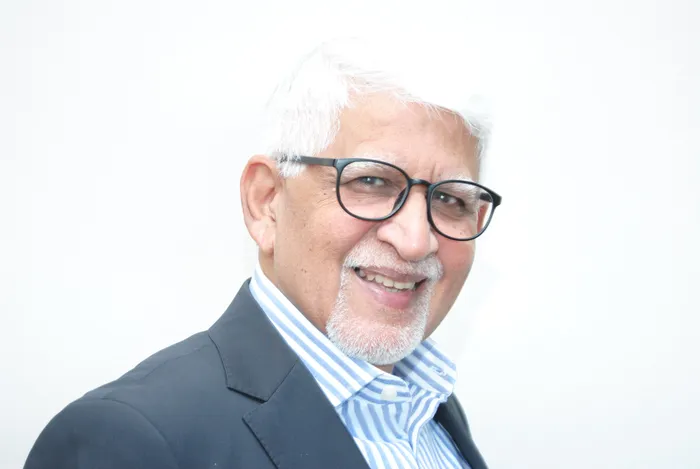
Shabodien Roomanay.
Image: Supplied
* Shabodien Roomanay is the board Chairman of Muslim Views Publication, founding member of the Salt River Heritage Society, and a trustee of the SA Foundation for Islamic Art.
** The views expressed do not necessarily reflect the views of IOL or Independent Medi