

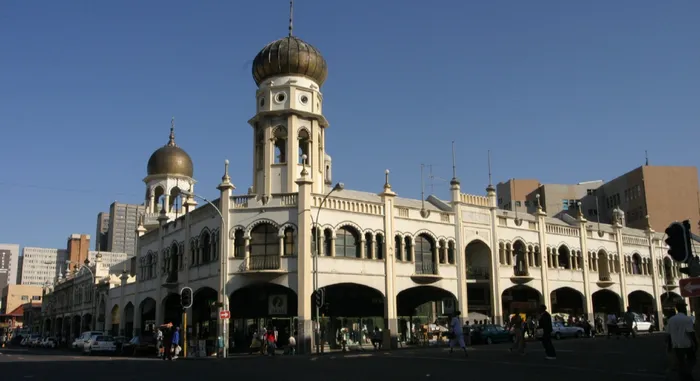
THE South African Muslim Network (SAMNET) notes the overtures being made by the CRL Commission to various faith groups to participate in a consultative process for the establishment of a Section 22 committee regulating religious practices in South Africa. This is the Grey Street Mosque in Durban
Image: Peter Duffy
The South African Muslim Network expresses its opposition to the CRL Commission's proposed section 22 committee aimed at regulating religious practices, DR FAISAL SULIMAN argues that existing laws are sufficient to address abuses within religious institutions
THE South African Muslim Network (SAMNET) notes the overtures being made by the CRL Commission to various faith groups to participate in a consultative process for the establishment of a Section 22 committee regulating religious practices in South Africa.
Notwithstanding the fact that it appears that only Christian groupings were initially consulted on the very need for such a Section 22 committee in the first place, to the exclusion of other faith-based communities, the South African Muslim Network is opposed in principle to the very establishment of this section twenty-two committee.
Even though it appears at this stage targeted at the Christian community, it is clear that this section twenty-two committee will be expanded to include all other faith groups.
All of the reasons proposed for the establishment of the section twenty-two committee already have mechanisms, laws, and procedures to address them.
There is therefore no need for parallel religious structures and overreach in any form.
All religious leaders, we are certain, are in favour of getting rid of certain abusive practices, criminality, abuse of forex, tax laws, trust laws, taking advantage of vulnerable people via spiritual abuse, and practices outside the fold of the very faith in which these actions happen, but this proposed section 22 committee is not the way to rid communities of these abuses.
We need more resources, training and implementation of the more than adequate existing laws.
I am sure that if we had a referendum on the death penalty, over seventy-five percent of South Africans would vote in favour of the death penalty as a means of reducing the epidemic of violent crime in South Africa.
However, the constitutional court has ruled that the death penalty is unconstitutional and notwithstanding the fact that many faith groups subscribe to capital punishment, we accept the ruling of the constitutional court and therefore don’t actively campaign for the death penalty, despite repeated calls from the public for such lobbying and mass action.
Similarly, the establishment of the section twenty-two committee and its aims would be akin to the Department of Transport interfering on how motor manufacturers develop their engines in a bid to control speeding and drunk driving on our roads.
More suited would be the establishment of a special task force within SAPS and the NPA, and a gender-based violence and the political killings task force, dedicated and resourced to tackle abusive practices and criminality, forex fraud, abuse of tax or non-compliance with tax laws, trust, legislation etc within religious groupings .
The proposed establishment of the section 22 committee is judicial overreach and an unnecessary parallel structure. History is littered with examples of politicians using well intentioned committees and laws to criminalise, weaponise, influence and control religious institutions, civil society and chapter nine institutions.
We cannot afford to make the same mistake.
The weaponisation of religious institutions at this exact moment in the United States, with biblical justification used to ethically cleanse Palestinians in support of a Christian Zionist belief, and the attacks on attacks on Iran, are clear examples of the ability to weaponise religion and abuse religious beliefs.
Our own history of the Bible being weaponised via the NG Kerk, to justify apartheid is more than adequate reminder of the need to be ultra cautious with any committee getting involved and infringing on the constitutionally guaranteed rights of freedom of religion and freedom of religious practice and everything that goes with it.
For the Muslim community, the growing Islamophobia and increasing hate crimes against Muslims in South Africa is a greater priority, which the CRL Commission has largely ignored despite complaints.
The weaponisation of religion and religious-based practices, combined with hate crimes, poses a real danger to societal cohesion and national security and the CRL Commission should prioritise addressing these issues.
SAMNET believes that through well-organised public events, educational initiatives, use of radio stations and social to educate the public on reporting mechanisms and high-profile and publicised prosecutions of abusers within the religious sector, the reasons for the proposed section 22 can be addressed adequately and obviate the need for a section 22 committee to encroach on the religious sector.
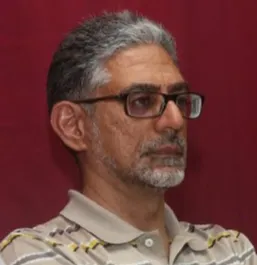
nm lotus fm.jpg Dr Faisal Suliman a
Image: Zanele Zulu
DR FAISAL SULIMAN is the SAMNET chairperson.
** The views expressed do not necessarily reflect the views of IOL or Independent Media.