

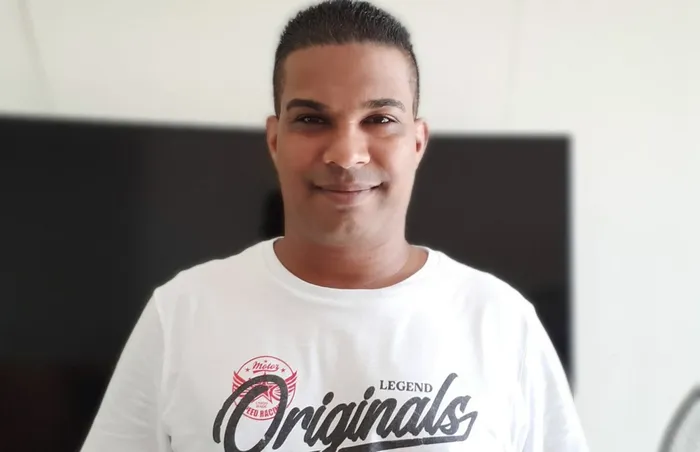
The tragedies are countless. Farmer Paul Chunilall of Isinembe was gunned down in 1999. In 2006, Kosie Naicker of Tongaat was murdered in a farm attack. In February 2025, Justin Isaiah, pictured, was shot and killed during a home invasion in Silverglen. These are not isolated incidents; they form a pattern we know too well, says the writer.
Image: File
SOUTH Africa has perfected the art of talking. If hot air were a renewable resource, we’d be bottling it by the litre. Instead, we watch our taps run dry while another indaba promises to “quench” our thirst for solutions.
Seven decades ago, the fertile banana farms and bustling market gardens of Cavendish and Welbedacht were seized, their soil sacrificed to the rising Chatsworth municipal housing scheme. Families from Clairwood, Rossburgh, Seaview and Queensburgh were wrenched from their homes under the iron fist of the Group Areas Act. Out of this forced uprooting, Umhlatuzana Township was born, the first planned township for Indians in South Africa.
With little more than meagre compensation, displaced families scraped together enough to buy modest plots in Umhlatuzana. They built houses that were humble yet warm – not palaces, but places of belonging. And in those streets, a new life took root. Children grew up in safety, nurtured by good roads, reliable water and electricity, and a community stitched together by schools, a cinema, temples, mosques, churches, sports fields and corner shops. It was a world without paranoia: no high walls, no razor wire, no CCTV cameras. Clothes could be left on the line overnight, cars left unlocked with keys dangling in the ignition, and still they would be safe. Trust was the currency of daily life, and joy outweighed fear.
Today, Umhlatuzana bears little resemblance to that hopeful beginning. The township is crumbling. Roads, once smooth, are scarred and corrugated, dug up too many times to patch leaking water pipes. Street lights stand dark, power outages strike with weary regularity, and crime prowls unchecked. Armed response vehicles criss-cross the township day and night, yet home invaders move with brazen ease, as if plundering at a Black Friday sale, stripping away not just possessions but the sense of security that once defined this place.
Umhlatuzana’s journey is etched in resilience and heartbreak. A community built from the ashes of dispossession now stands on the brink of decay. And this is not a solitary tale. Across the country, echoes of the same sorrow resound. In Tongaat, Verulam, Chatsworth and Phoenix – and many townships throughout the country – taps run dry and households wrestle with crippling water shortages. Communities that once thrived now endure the slow erosion of basic services, their struggles mirroring Umhlatuzana’s decline.
The tragedies are countless.
Farmer Paul Chunilall of Isinembe was gunned down in 1999. In 2006, Kosie Naicker of Tongaat was murdered in a farm attack. In February 2025, Justin Isaiah was shot and killed during a home invasion in Silverglen. These are not isolated incidents; they form a pattern we know too well. Violent attacks born of racial tension plague our schools. Drug operations thrive in Chatsworth and Phoenix. The “water tanker mafia” sabotages infrastructure, manipulates contracts, and monopolises emergency supply. Hospitals buckle under systemic failures, resource shortages and overwhelming health burdens.
Statistics South Africa holds the evidence: hijackings, gender-based violence, rape, robbery, murder – the numbers are undeniable. We are not ignorant. We are not without solutions. We know the causes, the culprits, the remedies. Yet instead of acting, we drown in talk, talk and more talk.
In June 2025, President Cyril Ramaphosa announced the national dialogue, a citizen-led initiative to rebuild unity and forge a new social compact. And this at a cost of R500 million. But since 1994, South Africa has been drowning in platforms, forums, conventions, and commission after commission, each promising to be the silver bullet for unemployment, inequality, corruption and service delivery. If talking were a renewable energy source, our electricity crisis would have been solved decades ago. Instead, we have perfected “conference-itis”, where every national problem is met not with action, but another indaba.
Gear in 1996, Nedlac, the National Planning Commission in 2010, social cohesion summits, land reform indabas, presidential working groups, endless conferences on gender-based violence. The Human Sciences Research Council, the Institute for Security Studies, and the Centre for Development and Enterprise have churned out dozens of think-tank reports. And now, another national dialogue.
South Africa does not need another dialogue. Period. What we need is a national action plan, one that is actually actioned. Fewer microphones, more pothole repairs. Fewer glossy frameworks, more working taps. Fewer PowerPoint slides, more police on the beat. Because South Africa doesn’t need another plan to plan the plan. It needs a plan that sweats, digs, fixes and delivers, preferably before the next indaba schedules a workshop to discuss why the last plan was never implemented.
Convening yet another grand conference to “discuss” crime, unemployment, water shortages and inequality is almost comical. The budget could fund schools, hospitals or at least fix the potholes that have become unofficial national landmarks. Discuss? We already know what is wrong. The unemployed do not need a panel discussion to confirm they are jobless. The woman who survived a hijacking does not need a breakout session to explain trauma. The family fetching water from a broken municipal pipe do not need a keynote address to remind them they are thirsty. The voices are already there, raw and unfiltered, echoing daily in the streets, clinics and police stations.
The irony is that those who most need to be heard are rarely the ones holding the microphone. Instead, the stage is dominated by men in suits and women in designer jackets, living behind electric fences, speaking earnestly about “the lived experience of crime”, appointed by government as acts of political patriotism, not chosen by the people. These “people’s representatives” lament unemployment while their children study abroad. They decry water shortages while the pumps in their koi ponds bubble merrily. They rage about crime while private security patrols their cul-de-sac. And yet, somehow, these are the voices invited to “dialogue” on behalf of the nation.
Some, leaning on walking aids, are already in the departure lounge awaiting the final boarding call. And still, Pretoria insists they hold all the answers, proof that in this theatre of democracy, casting is everything, and the audience never gets a say. Meanwhile, the real experts – the jobless graduate sending out CV number 237, the mother who survived a robbery, the Uber driver who narrowly escaped a hijacking, the nurse who treats rape survivors – are left outside the conference hall. Their anguish is not theoretical; it is lived.
Their pain is not a statistic; it is daily reality. Who better to speak than those who suffer? Who better to explain crime than the Uber driver who still flinches at the sound of car doors slamming? Who better to describe unemployment than the woman retrenched twice, now selling vetkoek at the taxi rank? Who better to talk about water shortages than the family queuing with buckets at a municipal tanker? These are the voices that matter, yet they are drowned out by PowerPoint slides and policy jargon.
The absurdity of a national conference on crime is that crime does not need explanation. It declares itself with shattered windows, stolen cars and bloodied victims. Ask the residents who have endured hijackings, robberies and assaults. Ask the families who gather at the Clare Estate Crematorium every weekend to bid farewell to loved ones claimed by violence. Ask the communities who live with fear as a daily companion. They will tell you everything you need to know – without glossy reports or a “framework for stakeholder engagement".
South Africa’s path forward lies in pairing each challenge with a bold, targeted strategy: jobs with skills, corruption with accountability, energy with renewables, water with resilience, politics with unity. What we need is delivery governance. Conferences are not about listening. They are about performance – lavish rituals where the elite gather to rehearse concern, nod like metronomes, and promise “new dawns” and “holistic approaches”.
It is theatre, complete with scripts, actors and an audience that knows the ending before the curtain rises. The only real suspense is whether the catering will feature KFC chicken, mince samoosas, or the dreaded vegetarian option that tastes like penance. And when the curtain falls, the actors retreat to their gated suburbs, congratulating themselves on their wisdom, while the common man trudges back to his daily misery – unheard, ignored and left with nothing but crumbs from the buffet. So why do we need a national dialogue? We don’t.
What we need is to stop pretending problems are mysteries requiring panels of experts. We need to stop outsourcing pain to policy papers. We need to stop believing solutions are born in air-conditioned halls. The answers are already in the voices of those who suffer. They do not speak in jargon; they speak in anguish. They do not need facilitation; they need justice. They do not require another conference; they require change. But of course, change doesn’t come with a buffet or a glossy programme booklet.
So instead, we get another dialogue, another round of applause, and another invoice. In the end, the only thing truly “national” about these dialogues is the bill. And that’s no April Fool’s joke.
** The views expressed do not necessarily reflect the views of IOL or Independent Media.