

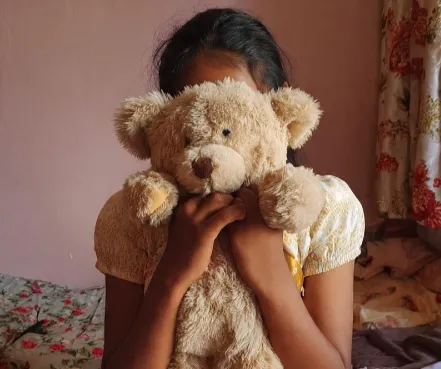
Fifty eight children are sexually abused every single day in the country, a figure that equates to 40% of the total reported sexual offences.
Image: Meta AI
Prof Dasarath Chetty summarises the debate over the unsealing of the Sex Offenders Register
In response to the unyielding and painful wave of sexual violence against women, children, and vulnerable groups, there has been a sustained outcry from civil society, political formations, and the general public to allow open, free public access to the National Register for Sex Offenders. To understand this angry public demand for the sex offenders register to be made public, one must first quantify the sheer scale of violence perpetrated against women, children, and vulnerable groups in South Africa. The statistics paint a grim picture of a society where both domestic and public spaces are routinely sites of extreme, pervasive trauma.
The first South African National Gender-Based Violence Study in 2024 survey found that an estimated 33.1% over one-third of all women in South Africa aged 18 and older have experienced physical or sexual violence in their lifetime. South Africa's murder rate for the 2024/2025 financial year is estimated at 45.2 per 100,000 people. On average, 27,000 people are murdered each year. This is roughly 959% higher than the average for G20 countries. In the 2023/2024 financial year, South Africa recorded approximately 42,500 reported rapes.
In 2022/23, 19,418 reported cases of common assault and assault with GBH crimes were committed against children, making up about 45,0% of all reported crimes against children in this period. Rape was the most reported crime against children, accounting for 38,3% of all cases involving minors.
Fifty eight children are sexually abused every single day in the country, a figure that equates to 40% of the total reported sexual offences. Experiencing physical, sexual, or emotional violence as a child is a major reason why trauma gets passed down through families. Specifically, children who go through this kind of abuse are much more likely to face serious challenges as adults, including:
- Relationship violence: a much higher chance of either becoming an abuser or a victim of domestic violence later in life.
- Health and addiction: a severe risk of developing lasting mental health struggles, chronic physical illnesses, and drug or alcohol addictions.
Life struggles: a much harder time succeeding in school, building a career, and achieving financial stability because of the heavy burden of these trauma-related issues.
The primary function of the Sexual Offences Register is to maintain a record of individuals convicted of sexual offences against children, and physically, mentally and sensory disabled persons, ensuring these individuals are legally barred from employment or volunteer positions that would grant them access to vulnerable groups.
Presently, the public is not allowed to see the register. Only certain employers and official agencies can check it, and they have to pay for an official background check to do so. This is very different from many other countries, where anyone can look up sex offender records, and communities are actively warned about them.
The epidemic of gender-based violence and femicide (GBVF) is a crisis of such magnitude that the state has formally recognised it as a national disaster. In a state where the criminal justice system routinely fails to protect the innocent, the rights of children and the vulnerable must seamlessly supersede the privacy rights of convicted predators. It is asserted that a government perceived as chronically "soft on crime" has a moral imperative to arm its citizens with the information necessary to protect their own households.
South Africa’s reoffending rate is estimated to be between 80 and 97%, placing it among the countries with the highest crime and recidivism rates globally. In simple terms, 9 out of every ten offenders commit crimes again. This perpetual cycle of release and rearrest is largely driven by deeply entrenched socio-economic factors. Overcrowded correctional facilities, a lack of adequately staffed needs-based rehabilitation programmes, severe shortages of psychologists and social workers (with vacancy rates historically exceeding 50%), and the insurmountable barriers ex-offenders face when attempting to secure employment in a highly strained economy all contribute to this phenomenon.
A public register is essentially demanded as a civilian safeguard against a state apparatus that is widely perceived as dysfunctional, corrupt, and ultimately incapable of securing convictions or protecting the innocent.
This perception of a "soft on crime" state is not merely an expression of public hysteria; it is rooted in documented administrative failures. In 2024, an explosive parliamentary reply by the then-Minister of Police revealed that over 5.4 million case dockets had been summarily closed without resolution since the 2018/2019 financial year. These closures were attributed to insufficient evidence, a lack of investigative leads, and poor police detective work, meaning millions of perpetrators of violent crimes were effectively granted total impunity.
Citizens argue that transparency is a critical tool for primary prevention, rather than a mechanism for secondary punishment. By making the register public, parents, guardians, and community leaders can conduct immediate, independent background checks on individuals who routinely interact with their children - such as neighbours, private tutors, sports coaches, or the parents of their children's friends.
In this balancing exercise, the offender's right to privacy, guaranteed under Section 14 of the Constitution, is viewed as subordinate. While the right to privacy is fundamental, it is not absolute. The limitation clause located in Section 36 of the Constitution allows for rights to be limited if the limitation is reasonable and justifiable in an open and democratic society based on human dignity, equality, and freedom.
Section 28(2) of the Constitution of the Republic of South Africa mandates that "a child's best interests are of paramount importance in every matter concerning the child". This paramountcy principle is not merely an aspirational ideal. It is a binding legal directive that demands a proactive, maximally protective stance against known threats to children.
Sacrificing the privacy of a convicted predator to guarantee the physical, psychological, and sexual safety of a child meets the criteria of Section 36. The state routinely limits privacy for lesser reasons, such as warrantless searches under Section 22 of the Criminal Procedure Act, and therefore must be willing to limit privacy to prevent the rape of minors.
Legal scholars warn that publicising the registry violates constitutional privacy protections, severely undermines the rehabilitative objectives of the correctional system, and, most alarmingly, in a society deeply scarred by systemic extrajudicial violence, risks inciting deadly mob justice and vigilantism. However, are the rights of a child not paramount?
** The views expressed do not necessarily reflect the views of IOL or Independent Media.