

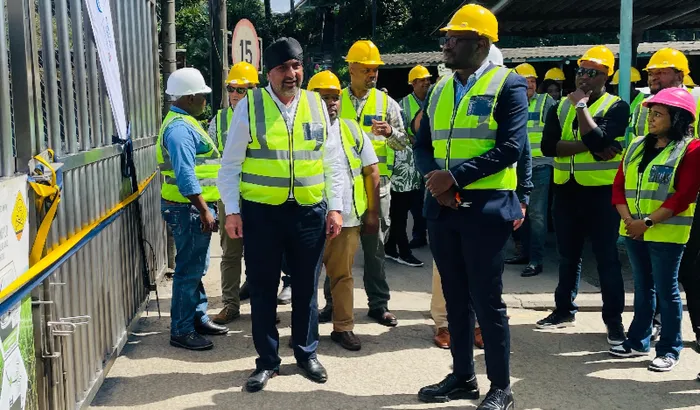
Zuko Godlimpi, the Deputy Minister of Trade, Industry and Competition, right, at the reopening of the Gledhow Mill in KwaDukuza.
Image: Supplied
For months, KwaZulu-Natal’s sugar industry has teetered on the brink of collapse.
Tongaat Hulett's filing for provisional liquidation cast a long shadow over mills, farmers and workers alike, threatening livelihoods and shaking confidence in one of the province’s oldest industries built on the sweat and endurance of Indian indentured labourers from 1860 onwards.
The Gledhow Mill entered voluntary business rescue in March 2023 following financial distress. Yet this week, amid the looming uncertainty of the KZN sugar industry in general, a shaft of light broke through: the reopening of the Gledhow Mill in KwaDukuza. Deputy Minister of Trade, Industry and Competition, Zuko Godlimpi, stood before workers and growers with a message of reassurance.
The mill is back in operation – thanks to a R1,8 billion expansion project by its new owners.
The revival secures 440 jobs, and safeguards the future of more than 200 sugar cane growers.
In a sector where closures have become synonymous with despair, this reopening is nothing short of a lifeline.
The timing could not be more critical. With the sugar cane crushing season set to begin in May, farmers had braced themselves for another year of uncertainty.
Instead, they now also look forward to Maidstone Mill in Tongaat – one of the oldest and most significant in the development of the sugar industry in KZN – reopening on May 27, a second reprieve that signals momentum for recovery.
Godlimpi’s words at Gledhow Mill carried both promise and warning: “We have discussed some hard conditionalities on how they must improve and revamp their operation, so that they are more efficient and sustainable going into the future. To the workers, they should be reassured; as far as the government is concerned, we will do our level best to keep them in employment.”
This is not just about machinery roaring back to life. It is about dignity restored to workers who feared retrenchment, about farmers who can now plant with confidence, and about communities whose economies depend on the mills.
Yet the deputy minister is right to insist on conditionalities. Efficiency and sustainability must be more than buzzwords – they must be the foundation of a reimagined sugar industry that can withstand global competition and domestic financial shocks.
KZN's sugar belt has long been a symbol of resilience. The reopening of Gledhow and Maidstone is a reminder that industries can be rescued, but only if vision, investment and accountability align.
The sweet relief of this week must not lull stakeholders into complacency.
The mills must innovate, diversify and modernise – or risk repeating the cycle of collapse.
For now, though, the sound of cane being crushed will echo once more across KwaDukuza. And with it, the promise that KZN’s sugar story is far from over.