

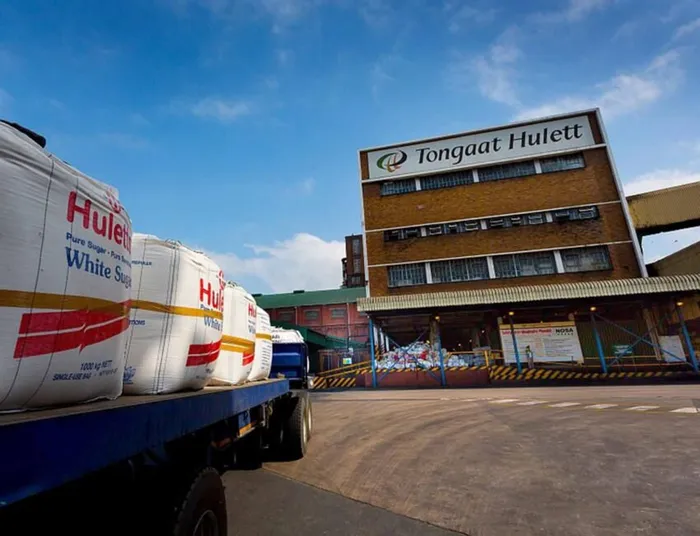
South Africa’s sugar industry has already seen a 25% decline in production over 20 years, worsened by cheaper imports.
Image: Supplied
"Sweet", the opening of the Gledow Mill and the expected opening of the Maidstone Mill on May 27, are a welcome relief to an industry that was tottering on the edge of collapse.
Deputy Minister Zuko Godlimpi officiated the reopening of the Gledhow Mill, coming to the rescue of 400 workers. The rescue of these mills came in the form of a public-private partnership, which will phase in the investment over several billion rand.
Until a few days ago, KwaZulu-Natal was facing a cascading economic infarction with the provisional liquidation of Tongaat Hulett, a 134-year-old sugar giant, and the closure of mills. There was a direct threat to 27,000 small-scale sugar cane growers, 2,600 direct mill workers, and an estimated 250,000 jobs across farming, transport, equipment supply and retail.
For every week, the mills at Maidstone, Amatikulu and Felixton were in limbo. The KZN economy was being bled dry. Globally, raw sugar prices have dropped nearly 35% over the past year to a five-year low in early 2026. This is not a cyclical dip, but a structural glut driven by record production in Brazil, Thailand and India, combined with a slowing demand due to rising living costs and health-conscious consumption trends.
South Africa’s sugar industry has already seen a 25% decline in production over 20 years, worsened by cheaper imports.
Tongaat Hulett’s own self-inflicted wounds, with R3 billion to R4 billion in false profit reporting, before business rescue began in October 2022, resulted in 5,000 workers being retrenched. The former CEO, who retired after 16 years, received R94 million in bonuses and incentives over the past decade, not capitalism but boardroom looting.
The opening of some of the mills will go a long way to preserving some jobs in the sector, with at least 400 workers retaining their jobs at Gledhow Mill, as well as the jobs in the related industries. The risk that existed was that almost 27,000 sugar cane growers, mostly small-scale black farmers, were strangled, with these Tongaat’s mills being their sole point of market access.
Without operational mills, standing cane becomes worthless biomass. A farmer cannot simply “find another buyer” when milling infrastructure is a monopoly. These growers face total income loss, land value loss, and the erasure of generational economic progress.
Farm workers employed by these growers, both permanent and seasonal, were at risk of being dismissed en masse, possibly pushing rural unemployment towards 70% or higher. The 2,600 direct mill employees were facing immediate joblessness. The investment of R1,8 billion in the first phase stops these job losses.
The risk in related industries may also have been saved for now with the news of mills coming back online. Tongaat Hulett’s supply chain includes thousands of transport operators owner-drivers, small logistics firms, truck mechanics, fuel sellers and spare parts dealers, among other industries.
Each ton of cane moved generates revenue for this ecosystem. A mill closure collapses that revenue overnight. Unlike mill workers, these operators have no severance, no unemployment insurance fund claims, and no union representation. They bore the risk of simply vanishing from the economy if the mills remain closed. Equipment suppliers, fertiliser distributors, herbicide providers and local retailers all depend on the sugar value chain.
The Durban High Court has adjourned the provisional liquidation application for Tongaat Hulett to April 16. While funding for the March 25 salary run was secured, workers and stakeholding were in panic mode before the current solution was presented.
Some of the consequences avoided include: farmers could not plan planting cycles, mill workers would possibly drift into casual labour or leave the province, transport contractors repossess trucks, and the sugar cane crop deteriorates in the fields.
The failure of Tongaat would be a fiscal drag on the National Treasury. If local production collapsed, South Africa would be forced to increase sugar imports to meet domestic demand. This weakens the rand and harms our balance of trade.
Tax base erosion due to the loss of corporate tax, coupled with the massive loss of PAYE (income tax) from thousands of workers, creates a localised fiscal deficit in KZN.
Tau’s confirmation of legal action to prevent economic fallout confirms that the state views this as a "too-big-to-fail" scenario. However, this state intervention comes at the price of constraining the National Treasury.
The farmers, particularly those tied to the Maidstone Mill, the current paralysis is a slow-motion disaster. If a viable suitor or a state-backed stabilisation fund is not finalised within the next quarter, we are not just looking at the end of a company; we are looking at the permanent erosion of an agricultural value chain that has sustained KZN for over a century and a half. The liquidation of Tongaat Hulett would be, in every sense of the word, a liquidation of the regional economy.
** The views expressed do not necessarily reflect the views of IOL or Independent Media.