

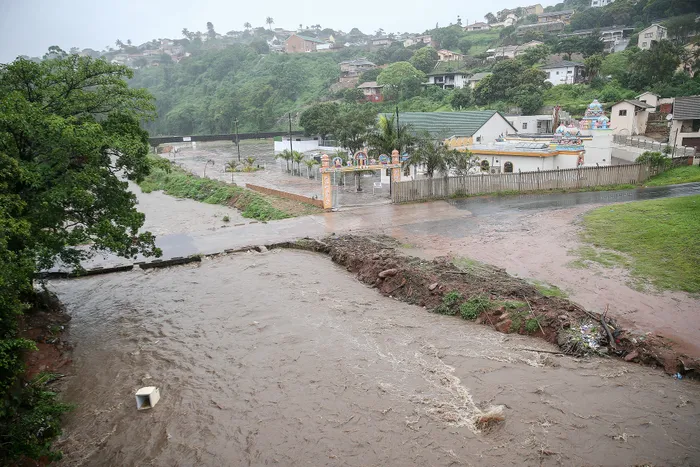
The Umhlatuzana Hindu Temple in the background following the 2022 floods.
Image: Picture Leon Lestrade/African News Agency(ANA)
Exactly four years ago, floods that tore through KwaZulu-Natal, particularly Durban, left behind scenes so extreme they barely felt real at the time.
We spoke about shipping containers tossed aside like toys, homes collapsing in seconds, cars swallowed by rivers and even farmed crocodiles washed onto beaches, because those were the images that helped make sense of the scale of what had happened.
They were visible, dramatic and impossible to ignore.
But what has stayed with this province is not what we saw.
It is what we lost.
Long after the floodwaters receded and the cameras moved on, families were left without a return to normal. Some never found the missing pieces of their lives.
Far too many buried loved ones without ever fully understanding how everything could unravel so quickly. The real story of those floods was never the spectacle of destruction; it was the devastating aftermath that settled into homes, communities and memory.
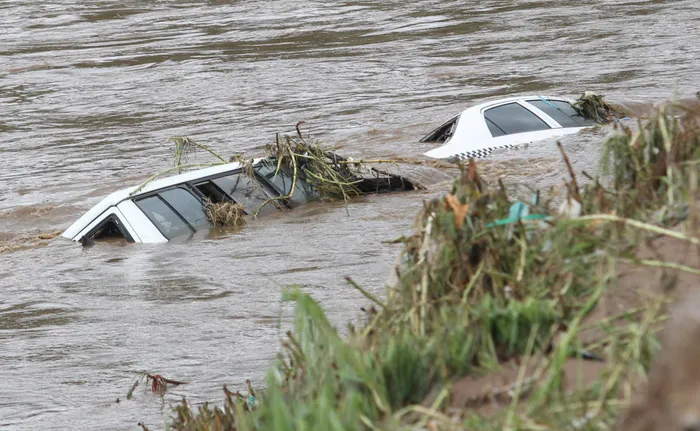
The April 2022 floods left more than 400 people dead and caused a trail of destruction to infrastructure, businesses, homes and communities.
Image: Doctor Ngcobo/ Independent Media
There are parents in KwaZulu-Natal who still speak about that night with a restraint that suggests the pain has not softened, only been tucked away.
There are children who grew up too quickly in the space of a few hours, forced to process loss before they even had the language for it. There are families who lost not only houses, but years of effort spent building a life - documents, photographs and the small markers of identity that cannot be replaced.
Recovery is often spoken about as if it is a clear and measurable process, marked by rebuilt structures and reopened roads.
But grief does not follow timelines, and neither does displacement. For many of those affected, “moving on” was never a real option. Instead, it became about surviving the days that followed, piecing together something functional from what remained and learning to live with what could not be restored.
Four years on, the danger is not that we will forget the floods happened. It is that we remember them only for their scale and not for their human cost.
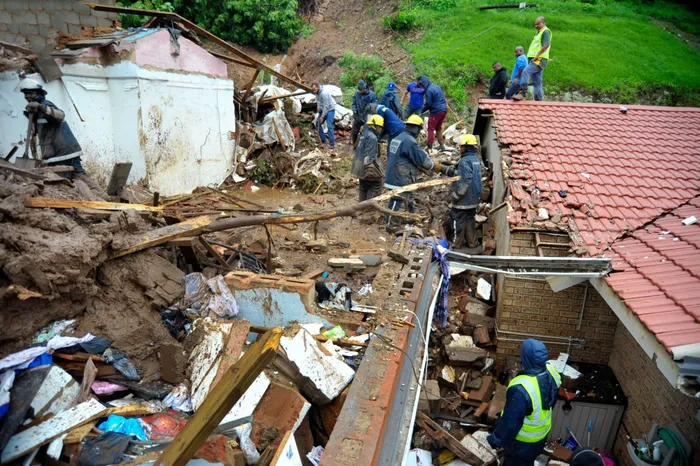
Thousands of homes were destroyed or damaged during the April 2022 floods.
Image: Theo Jeptha/Independent Media
There is a risk of reducing one of the most painful chapters in this province’s recent history to a reference point - something mentioned when heavy rain falls or another storm warning is issued - instead of recognising it as a moment that reshaped lives in ways that are still unfolding.
For those who lived through it, the floods did not end when the water disappeared. They linger in the empty spaces at family tables, in stories that stop midway and in the reality that, for many, life did not return to what it was before. It simply continued, altered and incomplete.
That is the part we do not speak about enough. Four years later, it is the only part that still demands our attention.
Let us remember the victims of the April 2022 floods not as numbers, but as lives that mattered - and still do.
** The views expressed do not necessarily reflect the views of IOL or Independent Media.