

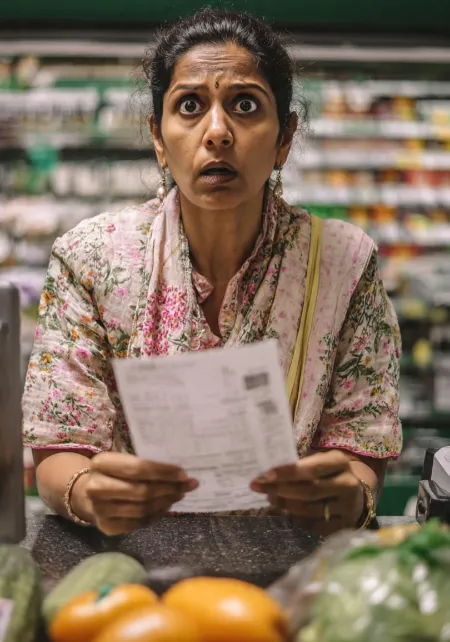
As food prices often track diesel prices, the 'food basket' for the poorest South Africans is shrinking, leading to increased food insecurity and social frustration, says the writer.
Image: Meta AI
IN APRIL, the South African economy is in turmoil, leaving millions of households under pressure. My analysis of the Budget speech highlighted the challenging times ahead, which now feel increasingly real. Geopolitical conflicts, soaring energy costs, and a strict stance from the South African Reserve Bank (SARB) have replaced optimism with anxiety. The pressures of potential interest rate hikes and record-high fuel prices are everyday realities that are reshaping the cost of living for many South Africans.
The most immediate and visceral blow to the South African consumer has been at the pumps. Following the escalation of the US-Israel-Iran conflict in late February, global Brent crude oil prices surged past $100 per barrel. For a country like South Africa, a net fuel importer currently grappling with a volatile rand, the impact was instantaneous.
This month, the Department of Mineral and Petroleum Resources announced significant fuel price increases: petrol rose by over R3 per litre; and diesel by R7,37 to R7,51 per litre. This has driven the price of 95-octane petrol close to R26, and analysts warn it could exceed R30 per litre by mid-year if international oil prices do not stabilise.
Fuel inflation impacts more than just transport; diesel is crucial for South Africa's supply chain, powering trucks and generators. This leads to higher prices for essentials like bread and milk as producers pass on logistics costs. While immediate disruptions from rising fuel prices occur, the SARB decisions pose long-term risks to household finances.
Though the SARB targeted a 3% inflation rate by early 2026, increasing energy costs threaten inflation expectations. At last month's meeting, governor Lesetja Kganyago maintained the repo rate at 6,75%, and warned that inflationary pressures could prompt "aggressive interventions", halting hopes of interest rate cuts.
For the middle class, this hawkish stance is a heavy burden. South Africans are notoriously over-indebted, and any increase in the repo rate has a direct impact on:
• Mortgage repayments: a 25 or 50 basis point hike can add hundreds, if not thousands, of rand to monthly bond payments.
• Vehicle finance: with car instalments already high, further hikes make personal transport increasingly unaffordable.
• Credit cards and personal loans: many households have used unsecured credit to bridge the gap during previous lean months; rising rates make servicing this debt a "debt trap".
The convergence of these economic pressures affects different segments of the population in distinct, yet equally painful, ways.
1. The vulnerable and the working class: low-income households primarily feel the impact of rising fuel prices through increased taxi fares. Since transportation can consume up to 40% of a domestic worker's or unskilled employee's monthly income, a R5 increase in commuting costs can reduce their meals from three a day to two. Additionally, as food prices often track diesel prices, the "food basket" for the poorest South Africans is shrinking, leading to increased food insecurity and social frustration.
2. The squeezed middle class: the middle class is often the most affected by interest rate volatility, due to significant levels of both "good debt" (such as mortgages and car loans) and "bad debt" (such as credit cards). When the SARB signals potential rate hikes, the psychological impact may be as harmful as the financial one, leading to cuts in discretionary spending, such as dining out and shopping. This decline in consumer spending can harm the retail and hospitality sectors, resulting in stagnant wages and potential job losses.
3. The "new poor": a concerning trend in 2026 is the emergence of the "working poor" among previously stable professionals. With the average nominal net salary hovering around R21,550, a R2,000 jump in combined monthly expenses (fuel, food and debt servicing) represents a 10% pay cut in real terms. Many families are opting to downsize homes, cancel medical aid supplements, or move children to less expensive schools.
The SARB faces a "Catch-22". If it raises interest rates to combat the inflation caused by fuel prices, it risks choking off the modest 2% GDP growth projected for 2026. If it stays its hand, the rand may weaken further against the US dollar, making fuel imports even more expensive and fuelling a vicious cycle of "imported inflation".
Businesses are equally trapped. Smaller enterprises (SMMEs) that lack the cash reserves to absorb a 50% increase in diesel costs, are facing a liquidity crisis. As these businesses fail or downsize, the national unemployment rate remains stubbornly high, further reducing the tax base and putting more pressure on the government to provide social grants.
Resilience and mitigation: is there a way out?
Despite the bleak outlook, South Africans have historically shown remarkable resilience. We are seeing a rapid shift in consumer behaviour:
• Energy independence: more households are adopting solar power and hybrid vehicles to avoid fluctuating energy and fuel costs.
• Bulk buying: consumers are increasingly favouring private-label products for better value.
• Rise of the side hustle: with stagnant salaries amid inflation, more South Africans are turning to gig work for extra income.
As we enter the second quarter of 2026, South African households face challenges from rising fuel prices and high interest rates, reflecting the ties between our economy and global events. The SARB is focused on maintaining currency value, though the impact of inflation is becoming more evident.
Policymakers must proactively prevent a worsening cost-of-living crisis. As we await stabilisation in global oil markets, South Africans need to adapt in a resilient way. By this month, fuel inflation could exceed 18%, prompting the SARB to adjust its inflation forecast to 3,7%. Although the "inflation honeymoon" of early last year is over, we face these challenges with optimism.
** The views expressed do not necessarily reflect the views of IOL or Independent Media.