

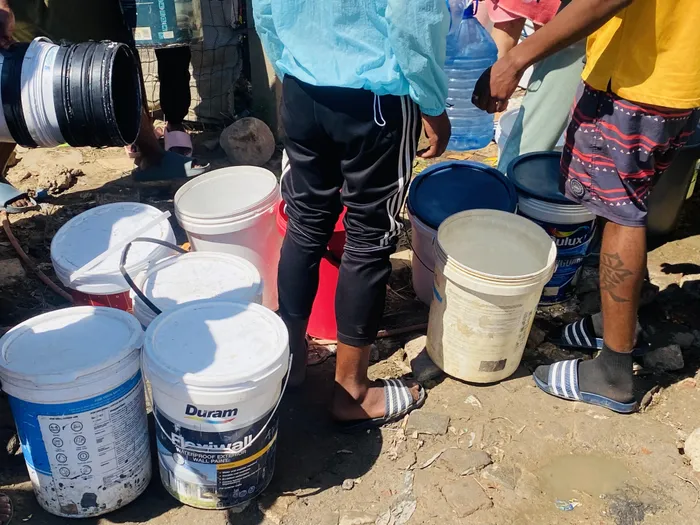
Municipalities are the coalface of service delivery – where the promises of democracy are either realised or betrayed, says the writer.
Image: Simon Majadibodu/IOL
AS SOUTH Africa commemorates Freedom Month, we are called not only to celebrate the historic gains of our democracy but also to reflect honestly on the journey travelled, and the road that lies ahead. With the local government elections approaching, this moment becomes even more significant, a time when reflection must translate into action through the ballot.
There is much we can take pride in. Our Constitution remains one of the most progressive in the world, a living document that enshrines dignity, equality and freedom. It provides a moral and legal compass that continues to guide our nation through both triumph and turbulence. Alongside it, we have developed a robust framework of laws designed to protect citizens and promote justice. Yet the uncomfortable truth remains that while our laws are admirable, their implementation often falls short.
The gap between policy and practice continues to undermine public confidence. Institutions established under Chapter 9 of the Constitution play a critical role in safeguarding democracy. They exist to strengthen accountability and protect citizens from abuses of power. Despite pressures and challenges, these institutions continue to function and assert their relevance. This, in itself, is a testament to the resilience of our constitutional order.
Concerns around crime and corruption remain deeply troubling. However, it is equally important to acknowledge that these issues are not being ignored. Various commissions of inquiry have brought to light the extent of wrongdoing within both public and private sectors. The exposure of corruption, uncomfortable as it may be, signals a system that is still capable of self-correction. Our criminal justice system, though strained, has not collapsed. It continues to function, adapt and pursue accountability. Even recent developments within the Madlanga Commission of Inquiry and policing structures, indicate that there is movement toward addressing internal weaknesses.
Economically, South Africa presents a mixed picture. Our tax collection systems are regarded as world class, demonstrating administrative capability and discipline. There are also signs of growing confidence in the economy, and encouragingly, the persistent burden of load shedding appears to have eased significantly. These are important indicators that progress, though uneven, is possible. At the same time, we cannot ignore the stark realities confronting millions of South Africans.
Unemployment remains one of our greatest challenges, particularly among the youth. The widening gap between rich and poor continues to strain the social fabric. Economic exclusion remains a lived experience for many, and until this is meaningfully addressed, the promise of freedom will feel incomplete. On a broader level, South Africa remains a nation at peace. We are not at war, and we continue to engage globally with a commitment to justice and human rights. Our willingness to take principled positions on international matters reflects a country that values fairness beyond its borders. This moral stance, rooted in our own history, remains one of our strengths.
However, the project of building a truly non-racial, cohesive society is still a work-in-progress. Divisions, whether economic, social or racial, persist. Trust between communities is not always strong, and the dream of unity envisioned at the dawn of democracy requires renewed commitment from all sectors of society. As an activist, I remain encouraged by the role of civil society. Across the country, ordinary citizens, community organisations and advocacy groups continue to hold the government accountable. This active citizenship is vital. It ensures that democracy is not a passive experience, but a shared responsibility.
The current Government of National Unity (GNU) offers a new dynamic in our political landscape. While not without its complexities, there are signs of constructive collaboration among parties. This co-operative approach, if sustained, could strengthen governance and improve service delivery. It represents a shift toward consensus-building, which is essential in a diverse democracy. Looking ahead, the upcoming local government elections will serve as a critical test. They will provide citizens with an opportunity to express their hopes, frustrations and expectations.
Municipalities are the coalface of service delivery – where the promises of democracy are either realised or betrayed. The effectiveness of local governance will ultimately determine whether the lives of ordinary people improve in tangible ways. Despite the challenges, South Africans remain remarkably resilient. There is an enduring sense of optimism – a belief that the country can and will do better. We are a people who have overcome immense adversity, and that spirit continues to define us. We are not easily discouraged, nor are we willing to be bullied into abandoning our democratic values.
Freedom Month is therefore not just a commemoration; it is a call to action. It reminds us that freedom is not static – it must be nurtured, defended and expanded. It calls on leaders to serve with integrity, on institutions to uphold justice, and on citizens to remain vigilant and engaged. As we reflect on how far we have come, we must also ask: how far are we willing to go to ensure that freedom is meaningful for all? The answer lies not only in our history, but in the choices we make today.
With faith in our Constitution, confidence in our people, and commitment to accountability, there is every reason to look forward with hope.
This Freedom Month, going “back to basics” means reclaiming Ubuntu as the living heart of our democracy. True freedom isn’t given by laws alone; it’s built through honesty, empathy and shared accountability. The question is no longer just what the government can do for us, but what we do for one another. When we revive the spirit of the Freedom Charter, and the ethics of truth and reconciliation, we remember: freedom demands responsibility, leaders must serve, and citizens must act.
Ubuntu is not a sentiment; it is the glue of a free society. Without it, every law is empty. With it, we become truly free.
** The views expressed do not necessarily reflect the views of IOL or Independent Media.