

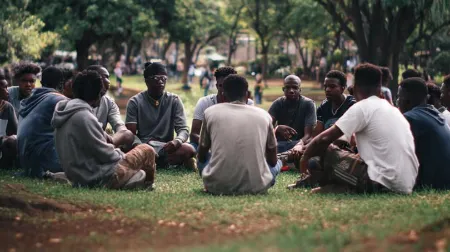
A generation that cannot afford to dream is not truly free, says the writer.
Image: Meta AI
EVERY year on Freedom Day, we reflect on how far South Africa has come and how far we still need to go. We celebrate the rights won in 1994, the right to vote, to speak and live with dignity. But in the work I do as a Youth Capital community facilitator, I keep coming back to a more uncomfortable question. What does freedom actually look like for young people today?
Freedom, in its truest sense, is not only about rights on paper. It is about the real, lived ability to shape your life, to dream, to choose a path, and to pursue it with a fair chance of success. I am not convinced that our youth feel that freedom.
In my work, I ask them about their ambitions all the time. What do you want to become? What kind of life do you want to build? The answers are often telling, not just in what is said, but in how it is said. There is a noticeable nonchalance, a shrug where there should be excitement. Some still carry dreams, but more and more I encounter something heavier. The quiet belief that dreaming itself is a waste of time.
When that belief settles in, dreaming starts to feel like a risk rather than a possibility. For many young people, it feels unrealistic to imagine a future where they can earn enough to live comfortably, support their families or build something of their own. When survival feels uncertain, aspiration becomes a luxury and when dreaming feels out of reach, what does freedom really mean?
We must confront this honestly. A generation that cannot afford to dream is not truly free.
Sthuthukile Biyela wrote, “The revolution never stopped, it just changed form. The violence never ended, it just turned inwards. Our youth is at the mercy of the elements, and there are limited tents for shelter. We are berated to build something real, but denied the tools to shape our future or heal.”
That line about being denied the tools stands out. Because that is what youth unemployment looks like in real life. Not just the absence of jobs, but the absence of pathways. Being told to make something of yourself, while the conditions to do that are not there. That is why we need to keep pushing for change. The scale of youth unemployment is the result of choices, and it can be changed by better ones. We need clearer pathways into work, better support for young people entering the labour market, and systems that actually connect effort to opportunity.
This reality is shaped by how government chooses to spend money. When budgets are cut to save costs, young people feel it first. Programmes shrink. Opportunities disappear. Support becomes harder to access. For many, that starts to feel like freedom being taken away, slowly and quietly. Instead of moving forward, many young people are stuck in a cycle of waiting. Waiting for responses. Waiting for opportunities. Waiting for something to change. And while they wait, time passes, confidence fades and the future becomes harder to picture.
This is why opportunities that actually lead somewhere matter so much. Public employment programmes are one example of how that cycle can be interrupted. They do not fix everything, but they give young people a chance to gain experience, to earn something, and to feel like they are moving forward again. In that way, freedom starts to feel real. Not just something we talk about, but something we can begin to experience.
On Freedom Day, we celebrate our rights, but freedom should mean more than that. It should mean having options. It should mean being able to imagine a future and believe that it is possible. Right now, too many young people are not there. So the question remains. We have freedom, but are we truly free to be who we want to be?
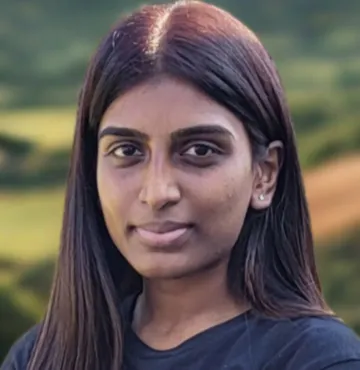
Ekta Somera
Image: Supplied
Ekta Somera is the Youth Capital Community Facilitator Kwa-Zulu Natal.
** The views expressed do not necessarily reflect the views of IOL or Independent Media.