

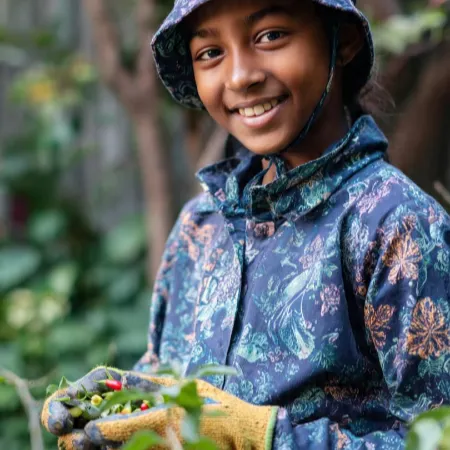
There was a time in Durban when fresh produce came not from aisles, but from people, says the writer.
Image: Meta AI
SOMETIMES I think our screen-obsessed children believe that fruit and vegetables grow on supermarket shelves. After all, that is where we fetch them, neatly packed in plastic, polished to perfection, and looking as though they have had a better upbringing than we did.
To be fair, supermarkets do source fresh produce from farmers. But somewhere along the line, we have lost sight of a simple truth: food does not begin in a shop. It begins in the soil.
There was a time in Durban when fresh produce came not from aisles, but from people. Farmers and hawkers from places like Cato Manor supplied households with fruit and vegetables grown on fertile land. It was local, it was fresh, and it sustained communities. Then came forced removals under apartheid. Productive land was taken away, communities were displaced, and a system that once worked naturally was disrupted. The effects of that disruption still linger today.
Now, with global instability, rising food prices, and what one might politely call “unholy shenanigans” in world affairs, the cost of putting food on the table continues to climb. For many families, this is no longer an inconvenience, it is a hardship.
The truth is, many of us come from agricultural stock. Our ancestors understood the land in a way we are slowly forgetting. When Indian indentured labourers arrived in Natal from 1860 onwards, they did not come empty-handed. Alongside their few possessions, they brought seeds and saplings, carefully wrapped, quietly protected, and deeply valued. They planted chillies, brinjals (eggplants), and okra. They grew spinach, amaranth (bhaji), and bitter gourd. Coriander, turmeric, garlic, and fenugreek took root in South African soil, not just as ingredients, but as extensions of culture and memory.
Fruit trees followed. Mangoes, guavas, bananas, pawpaw, and pomegranates were planted with care. The curry leaf tree found its place near the home, as essential as the kitchen itself. Tamarind added its distinctive flavour, while the jackfruit, large, stubborn, and impossible to ignore, became a symbol of abundance. These were not merely crops. They were acts of resilience. They were a way of saying: we may be far from home, but we will grow life here.
In many of our traditions, the earth is reverently called Booma Devi, Mother Earth. She asks for very little: a bit of effort, some patience, and the occasional conversation (which, I am told, plants appreciate, even if the neighbours raise an eyebrow). Nature always provided generously. The soil is there. The rain comes, sometimes when we want it, sometimes when we don’t. And every human being has the ability, however modest, to plant a seed and watch it grow.
There is something deeply grounding about this process. You cannot rush a tomato. You cannot argue with a pumpkin. Plants grow at their own pace, teaching patience in a world that has become used to instant results. And then there are flowers, nature’s quiet reminder that beauty costs nothing but care. One could say they are the earth’s way of smiling upon us.
In today’s world, growing even a portion of your own food is no longer just a nostalgic idea, it is practical. You do not need a large garden. A few pots will do. Chillies grow with enthusiasm. Spinach behaves reasonably well. Herbs such as coriander and mint will flourish, sometimes with more confidence than their gardener. A small home garden can ease the pressure on household expenses, improve nutrition, and reconnect families with what they eat. And let us be honest, there is a quiet pride in saying, “this came from my garden”, even if it is just one determined chilli.
Of course, gardening is not always smooth. There will be insects that seem to have invited relatives. There will be plants that refuse to co-operate. And there will always be that one neighbour who offers advice, despite having a complicated relationship with their own garden. But that is part of the charm. Growing your own food is not about rejecting modern life. It is about restoring balance. It is about remembering that we are not entirely dependent on systems beyond our control.
When we return to the soil, even in a small way, we do more than grow vegetables. We reconnect with our past. We honour the resilience of those who came before us. We teach our children that food has a beginning, and that they can be part of it. In uncertain times, there is comfort in simple acts. Planting a seed. Watering it. Watching it grow. Because in the end, it is not just about what we harvest. It is about what we rediscover.
** The views expressed do not necessarily reflect the views of IOL or Independent Media.