

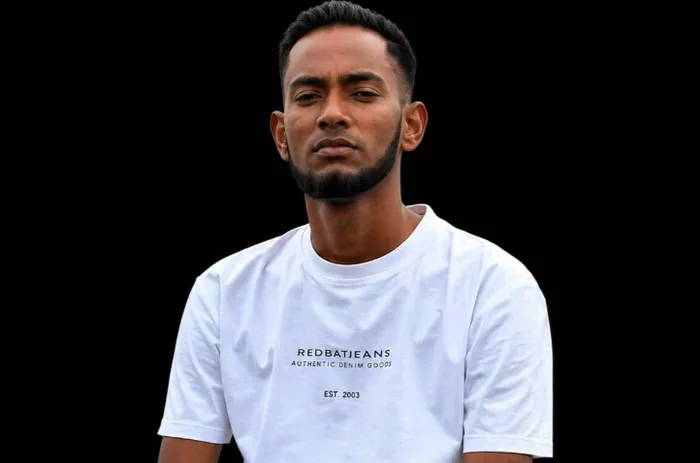
Sanrino Tyrique Pillay, 22, of Phoenix, was allegedly shot by two suspects while seated in a tow truck. He died at the scene.
Image: Supplied
SOUTH Africa is facing a deep moral, social and security crisis. Violent crime has reached a level where ordinary citizens no longer feel safe in their homes, communities, workplaces, businesses, schools, roads or public spaces.
Murder, rape, contract killings, gender-based violence, armed robbery and other brutal crimes have become a daily attack on the conscience of the nation. The question is no longer whether South Africa has a crime problem. The real question is whether the democratic state still has the courage to defend innocent lives with the seriousness this crisis demands.
The debate on the reinstatement of the death penalty for heinous crimes must not be reduced to ideological posturing, political correctness or selective moral outrage. South Africans must not be blackmailed into believing that every call for the death penalty is automatically an apartheid legacy argument. This is not about returning to the past. It is about confronting the present reality of raped women, murdered children, slaughtered breadwinners, assassinated community leaders, traumatised families, collapsing businesses and communities living under fear.
South Africa’s crime statistics confirm the seriousness of the crisis. The country continues to record thousands of murders, attempted murders, sexual offences and aggravated robberies every quarter. These numbers are not merely statistics; they represent human beings, families, communities and livelihoods destroyed. Even where some crime categories decline, the absolute numbers remain morally unacceptable for a constitutional democracy.
A small decline from catastrophic levels cannot be celebrated as victory while families continue to bury loved ones every week.
April 2026 alone demonstrated the barbaric state of violent crime in KwaZulu-Natal. Seven family members were killed in the Newark/Mandeni massacre. Reports indicated that three victims were shot, while four were stabbed to death. This was not ordinary criminality; it was an attack on the sanctity of family, home and community life.
In Richmond, an off-duty police officer was shot dead, showing that even those entrusted with protecting society are themselves no longer safe.
In Phoenix, a young tow-truck driver was shot and killed, again confirming how violence is destroying working people and breadwinners.
The brutality did not end there. In northern KwaZulu-Natal, wanted suspect Sifiso “Coach/Mlungu” Malwane was killed, further illustrating how violence, criminal networks and retaliatory killings have become part of the province’s security landscape.
In Pietermaritzburg, Aleyka Shaik, a pregnant woman, was allegedly stabbed to death. Such a case shocks the conscience because it reflects not only the killing of a woman, but also the destruction of unborn life and the permanent trauma inflicted on a family. These incidents show that KwaZulu-Natal, like many parts of South Africa, is experiencing a violent crime emergency.
Crime is not only a policing issue. It is a human development issue. It destroys families psychologically, economically and physically. When a breadwinner is murdered, dependants are pushed into poverty. When a woman is raped or murdered, her dignity, safety and humanity are violently attacked. When a business owner or worker is killed, families lose income and communities lose economic activity. When assassins kill for money, murder becomes a business and a form of illegal employment.
This is the brutal state South Africa has reached: in some cases, killing has become commercialised.
The Constitution protects the right to life, dignity and freedom from cruel punishment. These are important democratic values. However, the Constitution must also protect innocent people from murderers, rapists and assassins. Rights cannot only be discussed from the perspective of convicted criminals while victims’ families are left with graves, trauma and poverty. The right to life of an innocent person must surely carry the highest value in any civilised society. When criminals deliberately rape, torture, stab, shoot, assassinate and murder innocent people, society has a right to ask whether the current sentencing system is strong enough.
South Africa abolished the death penalty through the Constitutional Court judgment in S v Makwanyane in 1995. Since then, capital punishment has been treated as unconstitutional. Corporal punishment has also been declared unconstitutional in various legal contexts. Therefore, any serious call for the death penalty or corporal punishment must be honest: it cannot be achieved through slogans alone. It would require a lawful, democratic and constitutional process, including possible constitutional amendment. That debate must now be reopened.
This is not a call for mob justice. It is not a call for emotional revenge. It is a call for a lawful national debate on whether South Africa’s punishment system still matches the brutality of its crime reality. If the death penalty is reinstated, it should be limited only to the most heinous crimes: premeditated murder, serial murder, child murder, rape followed by murder, contract killing, terrorism-related murder, and the murder of police officers, witnesses or vulnerable persons.
Such a system would require strict safeguards, including proof beyond reasonable doubt, automatic appeal, strong forensic evidence, judicial review and protection against wrongful conviction. The argument is simple: the state must protect the innocent. Too many South Africans feel that the justice system is more sensitive to the rights of perpetrators than to the suffering of victims. Families bury loved ones while offenders receive long prison sentences at taxpayers’ expense Communities see repeat offenders return to society. Business owners live behind security gates, electric fences and private guards. Women and children live under constant fear. This is not freedom. This is a society under siege.
The economic cost of violent crime is equally severe. Crime discourages investment, raises insurance costs, weakens township and rural economies, damages tourism, undermines municipal development, and diverts public resources away from growth into crisis response. Investors do not want to operate where trucks are hijacked, businesses are extorted, construction sites are controlled by criminal syndicates, and entrepreneurs can be assassinated. Crime is therefore not only a criminal justice issue; it is economic sabotage.
Political parties must stop treating violent crime as a routine campaign slogan. The death penalty and harsher punishment for heinous crimes must become a serious election campaign issue. Voters are entitled to know where every political party stands on murder, rape, contract killing and victims’ justice. If political parties are afraid of losing their vote banks by taking a firm position, then the answer is simple: call a national referendum. Let the people speak directly.
A referendum would allow South Africans to decide whether the Constitution should be amended to permit the death penalty for narrowly defined heinous crimes. That would not be extremism; it would be democracy in action. If political leaders claim to govern in the name of the people, they should not fear the voice of the people on a matter as serious as violent crime.
Corporal punishment is also a sensitive constitutional matter and cannot be restored casually. However, the concern behind the call for corporal punishment should not be dismissed. South Africa has a discipline crisis, a violence crisis and a consequences crisis. If corporal punishment remains constitutionally barred, Parliament must still explore lawful and severe alternatives that restore deterrence, accountability and respect for human life.
Opponents of the death penalty argue that it may not deter crime, that wrongful convictions are possible, and that the state should not take life. These concerns must be considered. But supporters of reinstatement ask an equally serious question: what about the innocent lives already taken by murderers, rapists and assassins? What about children left orphaned, women murdered, families destroyed and breadwinners buried? A constitutional democracy must protect rights, but it must not become powerless when criminals show no respect for the rights of others.
South Africa should therefore establish a national commission on heinous crimes, sentencing reform and victims’ justice. This commission should hear from victims’ families, constitutional experts, criminologists, police, prosecutors, judges, religious leaders, traditional leaders, women’s organisations, business leaders and affected communities. It should examine the legal, moral and criminological case for reinstating the death penalty for the worst crimes.
Enough is enough. The death penalty debate must not be silenced by ideological discomfort, apartheid-era labelling or party-political cowardice. South Africans are burying children, parents, workers, entrepreneurs, police officers and community leaders. Their voices matter. The Constitution must defend the dignity of victims as much as it protects accused persons. If South Africa is serious about ending the reign of murderers, rapists and assassins, then the reinstatement of the death penalty for heinous crimes must be placed firmly on the national agenda.
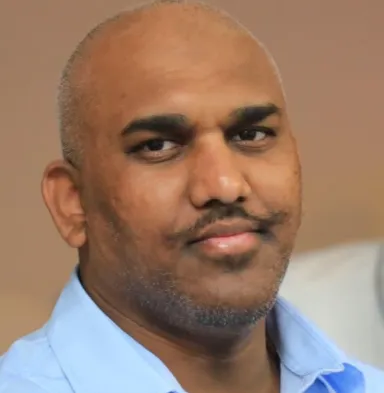
Nandkishor Singh.
Image: Supplied
Nandkishor Singh is an activist, academic and political leader. He writes in his personal capacity.
** The views expressed do not necessarily reflect the views of IOL or Independent Media.