

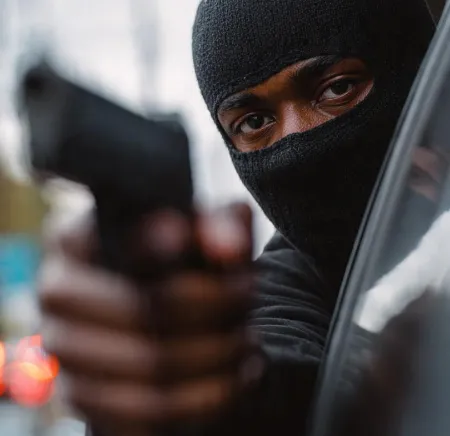
At the heart of this crisis is not just the frequency of drive-by shootings, but their nature. These are not acts of chaotic violence; they are deliberate, calculated, and chillingly efficient, says the writer.
Image: Meta AI
SOUTH Africa is facing a hard truth, namely the notion that drive-by shootings are no longer shocking interruptions to daily life. Actually, they are becoming part of it. What was once unthinkable is now disturbingly familiar. Sirens in the night. Bullet-riddled cars. Blood on pavements where people had gathered just moments before. And then, as always, the same refrain characterised by outrage, grief and calls for action.
But beneath it all lies a deeper question: have we begun to accept this as normal?
At the heart of this crisis is not just the frequency of drive-by shootings, but their nature. These are not acts of chaotic violence; they are deliberate, calculated and chillingly efficient.
As Janine Rauch argued decades ago, such attacks resembled a form of terrorism more than conventional crime. Today, that observation feels less like a theory and more like a lived reality. Drive-by shootings are designed for impact. They are targeted and devastatingly effective. The perpetrators often remain anonymous, their faces hidden, vehicles untraceable, identities swallowed by the confusion of the crime scene. This anonymity is not incidental; it is strategic. It allows attackers to strike without consequence, to disappear into the urban landscape before law enforcement can react.
Equally troubling is how easy it is to exit the crime scene. A vehicle pulls up, shots are fired in seconds, and it’s gone, leaving behind chaos and carnage. There are no prolonged confrontations or opportunities for intervention. This makes these attacks incredibly difficult to prevent and even harder to solve. By the time law enforcement arrives, the perpetrators are often long gone, blending back into the city as if nothing happened. And then there is the precision.
Drive-by shootings rarely miss their targets. Whether aimed at individuals, groups, or specific locations like shebeens or taxi ranks, these attacks suggest a level of planning and intelligence that goes beyond impulsive violence. The shooters know where to go, when to strike, and how to execute their mission with brutal efficiency. This points to a level of organisation that should deeply concern us. These are not isolated criminals acting alone; they are often part of networks with access to information, weapons, and co-ordination. This is what makes drive-by shootings so terrifying: their combination of anonymity, mobility, and precision.
They are, in many ways, the perfect crime. But they are also a symptom. To understand why this form of violence has taken root, we must look beyond the act itself and examine the conditions that allow it to thrive. South Africa’s history of inequality, marginalisation, and prolonged violence has created fertile ground for such tactics. As analysts like Deon Steenkamp have noted, societies emerging from long periods of conflict often struggle to shed patterns of violence. Instead, those patterns evolve, embedding themselves into everyday life.
In South Africa, violence has become a form of communication. A way to settle disputes, assert dominance, or send a message. It is visible, effective, and, in some contexts, seen as the only language that gets results. This is reinforced by a broader culture that often normalises and even valorises aggression. In a deeply unequal and patriarchal society, displays of force can be interpreted as strength. Retaliation becomes expected. And over time, the line between acceptable and unacceptable violence begins to blur.
Drive-by shootings fit seamlessly into this environment. They are efficient, intimidating, and difficult to trace. They allow perpetrators to exert power without exposing themselves. In communities where trust in law enforcement is fragile and justice feels distant, this kind of violence can take on a life of its own. The consequences are devastating and far-reaching. Beyond the immediate loss of life and injury, these attacks erode the very foundations of public spaces that were once places of connection and community, and are now transformed into sites of fear.
People think twice before gathering, before travelling, before simply existing in shared spaces. The psychological toll is immense. Fear becomes constant. Anxiety becomes normal. And perhaps most dangerously, indifference begins to creep in. When violence is this frequent, this visible, and this unresolved, people adapt. They have to. But that adaptation comes at a cost. It dulls the sense of urgency. It lowers expectations. It creates a society where survival takes precedence over justice. This is the normalisation of violence, and it is one of the greatest threats South Africa faces. Because once something becomes normal, it becomes harder to challenge.
So what is to be done?
There is no single solution to a problem this complex. Policing alone cannot address it. Harsher sentences will not dismantle the networks behind these attacks. What is needed is a comprehensive approach, one that tackles both the symptoms and the root causes. This includes addressing the structural inequalities that drive crime, improving intelligence and investigative capacity within law enforcement, and cracking down on the proliferation of illegal firearms. It also means investing in communities, creating opportunities, strengthening social cohesion, and rebuilding trust.
But just as importantly, it requires a cultural shift. We must challenge the normalisation of violence in all its forms. We must reject the idea that this is simply “how things are”. Because it is not inevitable. It is the result of choices, social, political and economic, that can be changed. And it starts with refusing to look away. Drive-by shootings are not just statistics. They are not just headlines. They are a warning, a sign that something is deeply broken. The question is whether we are willing to confront that reality. Or whether we will continue to live with it.
** The views expressed do not necessarily reflect the views of IOL or Independent Media.