

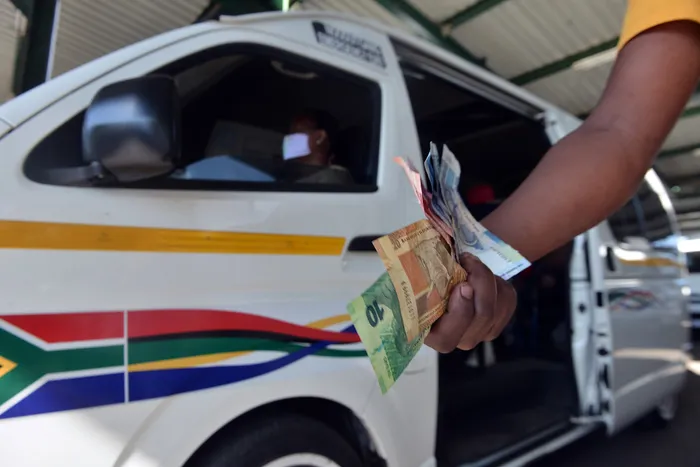
For the average South African, the fuel hike is not just a line item in a budget; it is a fundamental shift in daily survival, says the writer.
Image: Oupa Mokoena/ Independent Newspapers
LAST Wednesday, South Africans woke up to steep new fuel prices. The Department of Mineral and Petroleum Resources implemented a massive increase of R3.27 per litre for both petrol grades, and an even sharper R6.19 per litre for diesel. This hike has pushed 93-octane petrol inland to record levels, with many regions now paying over R29 per litre.
The spike stems from a mix of global and local pressures. Conflict in the Middle East has led to the closure of the Strait of Hormuz, disrupting about 20% of the world’s oil supply and driving Brent crude above $100 a barrel. At the same time, a weaker rand and the return of suspended fuel levies have combined to squeeze South Africans and drive up the overall cost of living.
For the average South African, the fuel hike is not just a line item in a budget; it is a fundamental shift in daily survival. These additional living costs now represent a decline in disposable income. For a motorist with a 50-litre tank, a full refill now costs roughly R160 more than it did in April. For middle-income households already battling high interest rates, this effectively wipes out any "breathing room" in their monthly budget.
Let’s not forget the daily commuter’s burden. The impact is most severe for those reliant on the taxi industry and public transport. As fuel costs rise, taxi associations are forced to implement double-digit fare increases to remain viable. For workers who already spend up to 40% of their income on transport, this hike can mean the difference between maintaining employment and being priced out of the workforce.
And lastly, we cannot ignore the behavioural shifts among consumers, which will undoubtedly impact retailers. Data from Discovery Insure shows that South Africans are already reacting defensively. Fuel spending dropped by 35% following the initial April hikes, with motorists taking 10% fewer trips and "trip-chaining" (combining errands) to save costs.
“Consumers must distinguish between 'bank affordability' and 'real-life affordability'. If your budget has no breathing room, you are already overcommitted." | Financial Advisory, May 2026.
While individuals feel the pinch at the pump, businesses feel it across their entire operation. No sector is immune, but the logistics and retail industries are on the front lines. South Africa moves the vast majority of its goods by road. With diesel increasing by over R6 per litre, the Road Freight Association (RFA) has warned of a direct threat to the sustainability of smaller operators.
Higher operating margins are being eaten alive by fuel costs, leading to "fuel surcharges" on every delivery. Farmers are double-hit: they need diesel for heavy machinery and for transport to get their produce to market. This creates a "lag effect" in which today's fuel price hike becomes a grocery store food price hike three months from now.
Essentials like bread, milk and maize meal are expected to see significant inflationary pressure. For SMEs that offer delivery services or rely on frequent travel, the R3 increase is a "silent killer" of profitability. Unlike large corporations, many small businesses cannot easily pass these costs to customers without losing their competitive edge, leading to potential staff layoffs or business closures.
The immediate R3 hike is the beginning of a larger economic adjustment. Here is what the coming months likely hold. The South African Reserve Bank (SARB) closely monitors inflation. While the "first-round" effect is the price of petrol itself, "second-round" effects occur when the cost of everything else – from haircuts to hardware – rises because the cost of doing business has increased.
Economists warn that headline inflation could be pushed toward the 6% upper limit or beyond. The SARB governor Lesetja Kganyago has indicated that the central bank must "keep options open". While the bank recently aimed for a 3% inflation target, the oil shock may force them to keep interest rates higher for longer – or even implement a hike – to prevent the rand from spiralling, and to anchor inflation expectations.
There could be a possible end to the government’s subsidy. The government currently provides an R3 temporary reduction in the general fuel levy to cushion the blow. However, this relief costs the Treasury roughly R6 billion per month. This intervention, initially for one month and later extended to June 2, 2026, was due to the global price volatility. While there is pressure to extend this using mining tax overruns, the relief is scheduled to be phased out. When that happens, South Africans could see yet another "artificial" price jump as the full tax is reinstated.
The R3 petrol increase is a stark reminder of South Africa’s vulnerability to global shocks. In the short term, citizens can expect tighter credit conditions and higher grocery bills. Since fuel hikes drive up food prices, South African’s are encouraged to buy in bulk and join stokvels. The era of "cheap" travel is over, and both individuals and businesses must pivot toward more efficient, defensive financial strategies to weather the storm.
Consumers should master the “loyalty double-dip” at the tanks. Many fuel retailers allow loyalty points that can be used as a double currency. Align your fuel station with your bank or grocery store. Use rewards linked to a credit card to pay for fuel at a station that also offers a separate loyalty programme. Commuters are encouraged to adopt strategic driving habits to reduce their fuel consumption.
For SMEs, it's no longer the era of simple budgeting but rather one of aggressive scenario planning. Whether through carpooling, shifting to renewable energy, or renegotiating supply chains, the goal for the remainder of 2026 is simple (most especially given the uncertainty of what June may hold, as Treasury may phase back the fuel levy): resilience through austerity.
** The views expressed do not necessarily reflect the views of IOL or Independent Media.