

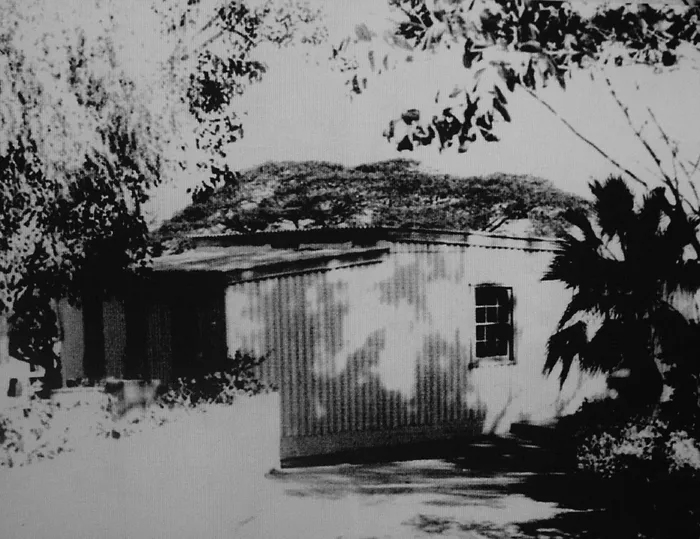
Mahatma Gandhi's home at the Phoenix Settlement. He built his house, called Sarvodaya (meaning universal uplift or progress of all), when he arrived in Durban in 1904. On the same plot of land, he built his famous printing house where he published his newspaper, Indian Opinion. Gandhi's house was burnt down during the 1985 Inanda riots, which was a fight between Indians and blacks during the apartheid years. After 1994, his house was rebuilt, keeping as much to the original design as possible. The house contains an exhibition of Gandhi's life and work.
Image: MARILYN BERNARD
CONGRATULATIONS to the community of Phoenix on its 50th anniversary. Indeed, when I look at the history of Phoenix from my home at the Phoenix Settlement, established by Mahatma Gandhi in 1904, where I was born in 1940, and where I lived until 1975, the journey of Phoenix is indeed a glorious one of blood, sweat, tears and resilience.
I attended the Inanda State Aided Primary School with pupils from New Farm and the nearby sugar barracks, and I got to know them. I worked as a social worker in the 1960s in the Springfield Flats or Tin Town, as the people knew it. In the 1970s, I worked in the Phoenix Mount Edgecombe area when it was covered with sugar fields. There were workers living in the various barracks in the sugar estate.
Having witnessed the conditions of living to which the families, now In Phoenix, were exposed to; and what the transition to the township of Phoenix meant for them, I realise that it is a story which needs to be told. I can merely record here what I saw, and what the people told me. But the lived experiences of the community will surely indicate the extent of progress that has taken place and what still needs to be done.
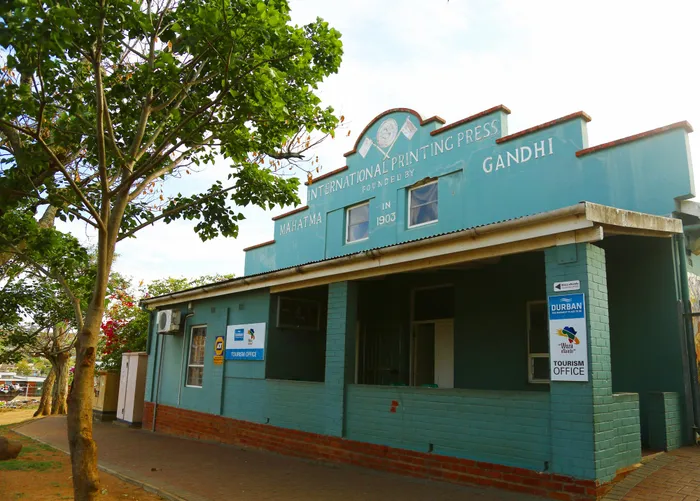
Buildings at the Phoenix Settlement are now a museum.
Image: File
These were stories of a community that was virtually left on its own with minimum, if any, services from the City Council. They built their own homes of wood and iron. But poor as they were, they built their homes to accommodate their families, providing privacy and space for each one to grow and develop.
Many were four-, five- and six-roomed houses. Parents, grandparents and children had their own rooms. Small, but private. They each also had a piece of land on which they grew vegetables, kept chickens, collected eggs, and were able to eat a nutritious meal even when unemployed.
In fact, the market gardeners of the Springfield Flats were well known in Durban for supplying fresh vegetables to the urban residents. Thus, they were able to earn a little to survive, and care for their families. It was a struggle, but they did not rely on begging, or die of starvation and malnutrition. Nor did they face fears of eviction.
Then came the floods of 1976. Unlike the 1917 floods when 400 people died, in 1976 the casualties were minimum. Dr Fatima Meer, her colleagues and a group of young students, led by Pravin Gordhan and Yunus Mohammed, mobilised quickly, taking families to safe shelters in nearby Asherville. They ensured the safety of the families, and tried to meet their immediate needs as best as they could.
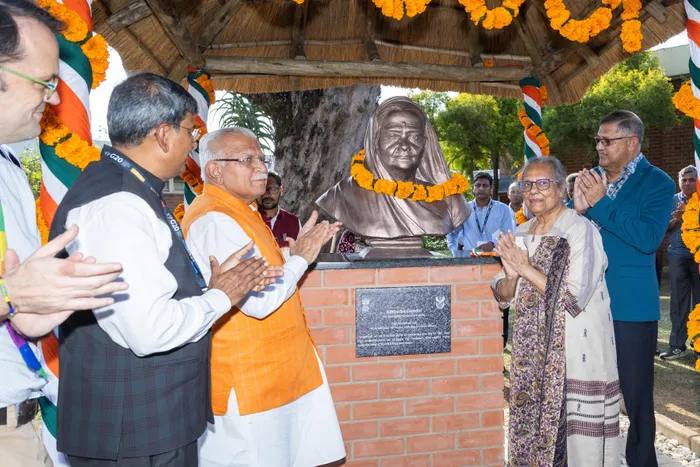
Indian Union Minister of Power, Housing and Urban Affairs, Shri Manohar Lal Khattar (third from left), unveiled a bust of Kasturba Gandhi, wife of Mahatma Gandhi, at the Phoenix Gandhi Settlement. Among those at the event was the granddaughter of Mahatma Gandhi, Ela Gandhi (second from right).
Image: Rajesh Jantilal
The idea of Phoenix Township for Indian people was envisaged by the apartheid government in the north, as they did in the south in Chatsworth. So for them this was an ideal opportunity to move these families without any protest, to the newly-built houses.
Rehousing meant that joint families were split and accommodated. The brick-and-tile flats were small, with no patch of land to grow vegetables. The trauma of being severed from their land, the splitting of families, crowding in one tiny room, facing and experiencing evictions because they could not pay the rentals, can only be told by the people themselves. They suffered economically, emotionally and socially.
But undaunted by these sad realities, the community came together and developed strong organisations. The child welfare grew out of volunteers ready to help and build organisation, not to enrich themselves, but to care for the vulnerable in their communities.
Social consciousness developed and community leaders such as JM Singh, Mrs Behari, Mrs Maharaj, Mrs Dawood, Roy Sookhlal, Sham Maharaj, the Kooblal family and many others rose to prominence.
They realised and learnt about the political tactics of the apartheid government to divide and rule, and to deprive as much as they could the black communities. For instance, at the height of apartheid, the ratio of spending on a black child to a white child was 1:18.
To maintain this standard for white South Africans, they had strict security laws under which some of us had to undergo hardships of detentions without trial, banning and house arrest. But despite these laws and regulations, the Phoenix community showed its strength when it stood firm in its many protests against oppression, and won.
Sham Maharaj, Muni Kooblal and others will write about these struggles. But for me the important thing to remember is that they were victorious in their struggles because they stood together, accepted non-violence as a means of struggle, and accepted the advice of the Natal Indian Congress in not allowing themselves to be co-opted by dubious sources.
The Phoenix Settlement where the Natal Indian Congress was launched in 1972, organised many training workshops for the activists. Some have described the Phoenix Settlement as a mini university for political activism led by prominent leaders such as Gordhan, Yusuf Vawda, Rick Turner, Mewa Ramgobin and Steve Biko, to name a few. Their basic core principles were honesty, humility, and acceptance of the ethics of engaging in a situation analysis, before charting a programme of action. Implications of any actions were carefully considered, and then communicated to the community. Actions were based on knowledge.
The Phoenix Child Welfare Society, Phoenix Working Committee, and the various other organisations that are doing so much of good work in the community, are a result of selfless service.
While so much has been achieved, and so many excellent services are provided, we as a country are at present faced with issues of race, class, religion and gender discrimination. Even though these are prohibited by our Constitution, we still see incidents in our communities: gender-based violence, criminal violence, sometimes based on racism, religious and racial tensions caused by derogatory utterances by people against other groups, and inciteful messages on social media are all symptoms of a sick society. This is a challenge that we still need to confront as concerned South Africans.
** The views expressed do not necessarily reflect the views of IOL or Independent Media.