

Zainul Aberdeen, author of Phoenix Buses, Social Space and Pride of a Community, looks at the rich history of Phoenix, from its origins as a sugar cane estate to its development as a vibrant community with a unique transport system.
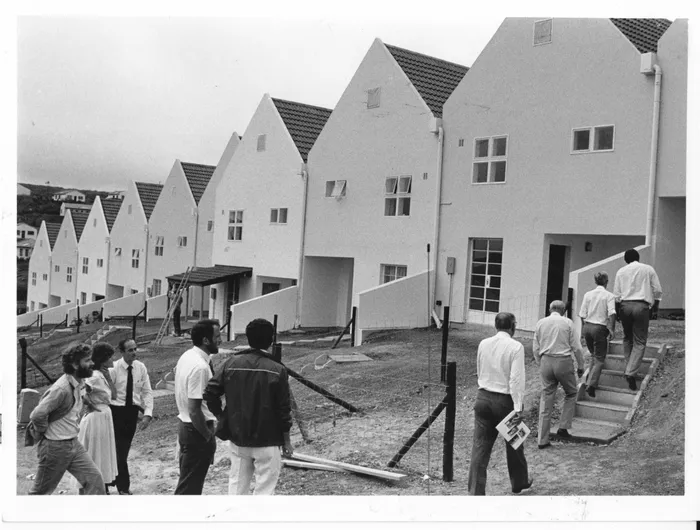
Houses being inspected in Woodview, Phoenix, 50 years ago
Image: Independent Newspapers archives
SUGAR cane farmer Thomas Watkins named his farming estate, "Phoenix", after a fire destroyed his crops, and then they grew back again. He called this the "rise of the phoenix" after the mythological bird, which symbolised death and resurrection.
The Watkins's farm was part of many other estates established by the Natal Sugar Estate. In 1904, Karamchand Mohandas Gandhi purchased Watkins's farm as one of his four communal settlements.
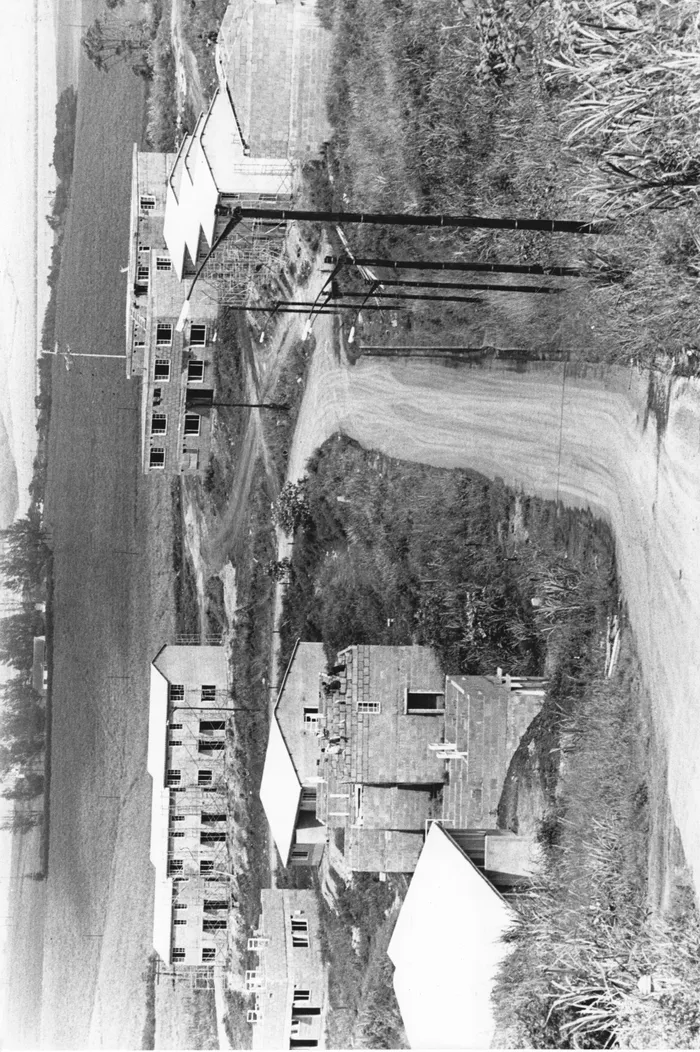
Planning for the establishment of Phoenix as a new public low-cost housing scheme began on August 29, 1966, by the Durban City Council
Image: FILE
Planning for the establishment of Phoenix as a new public low-cost housing scheme began on August 29, 1966, by the Durban City Council. The first houses in Phoenix were occupied in March 1976. The construction of houses continued in stages over 10 years, and was divided into units.
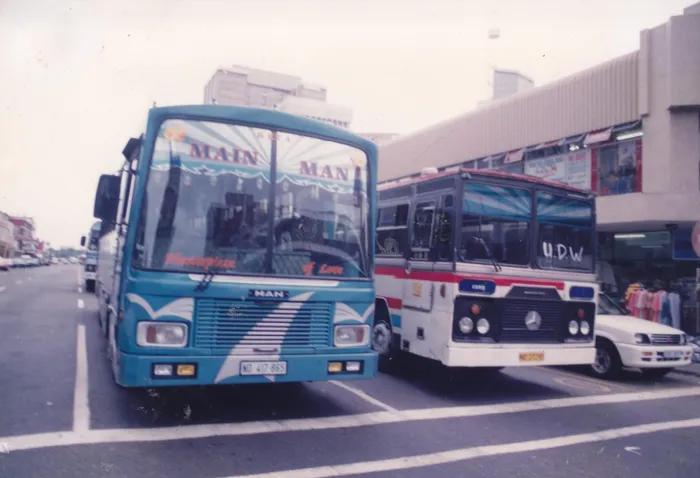
Phoenix bus owners kept up with the latest designs and trends to make their buses appealing to passengers. Here are the Mayville Coach Lines bus 'MAIN MAN' and the Springfield Safari Tours bus Jenny 2, in the Durban CBD, circa 1990s.
Image: Vijay Soogreem
Phoenix Buses:
Ganpath Singh, owner of Glen Anil Transport, provided a bus service from Glen Anil to Mount Edgecombe from the 1950s until he died in 1974. Singh’s buses transported commuters from these estates to the Durban CBD. Bus owners formed the Mount Edgecombe and Phoenix Bus Owners' Association, and provided a bus service to the different units as the area was being developed.
According to documents from the Department of Transport, the area was allocated 175 bus operating permits at its peak in the mid-1980s.
Bus companies like Mayville Bus Service, Mayville Coach Lines and Springfield Safari Tours, alongside R&S Transport, dominated the bus services.
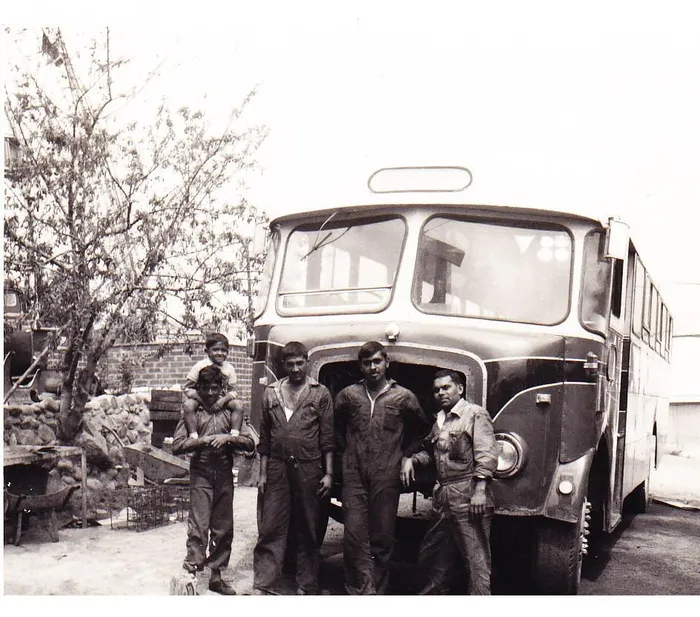
Springfield Omnibus Service. From left: Shanildutt Ramdas, Sudesh Ramdas, and staff.
Image: FILE
Phoenix Buses, Social Space and Pride of a Community takes an in-depth look into the first five bus owners referred to as the "Big 5", who created the bus network in Phoenix.
The transport system was created following the network laid down by Singh, whose buses serviced the sugar cane estates.
Later, Springfield Omnibus Services/ Safari Tours, R&S Transport, Mt Edgecombe Passenger Service, Harripersadh Dhanraj-Northern Star, and City Line Bus Service formed the big five.
But by 1979, the Bux brothers of Mayville Bus Service (MBS) muscled their way into Phoenix. The Bux family and the Springfield’s Ramdas family dominated the bus services.
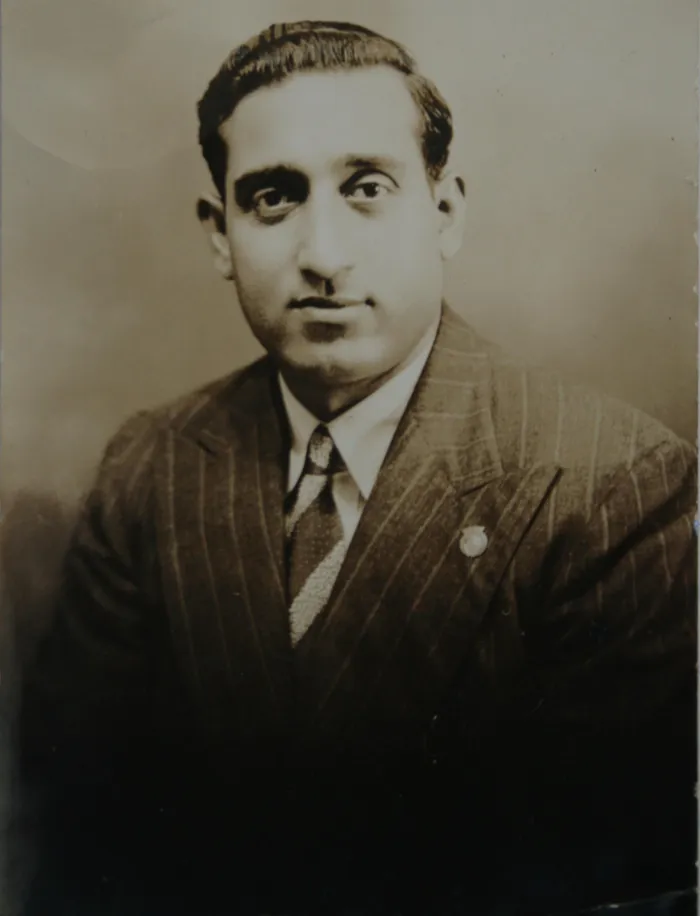
Ganpath Singh, owner of Glen Anil Transport.
Image: SUPPLIED
Buses had a system, and employed thousands of people, from drivers, conductors, rank managers, mechanics, bus bodybuilders, windscreen repairmen, signwriters and others to manage affairs at their bus depots in Phoenix.
The Phoenix buses deserve recognition for their designer shapes, colours, routes, employees and the amazing following they attracted throughout Durban.
The bus companies went out of their way to attract and appease the thousands of passengers who commuted daily. Phoenix had more than 175 buses on the route during its peak in the mid-1990s.
The privately-owned companies were not subsidised, and were always prejudiced against because of the racial imbalances in the country.
The bus companies were a “rags-to-riches” story.
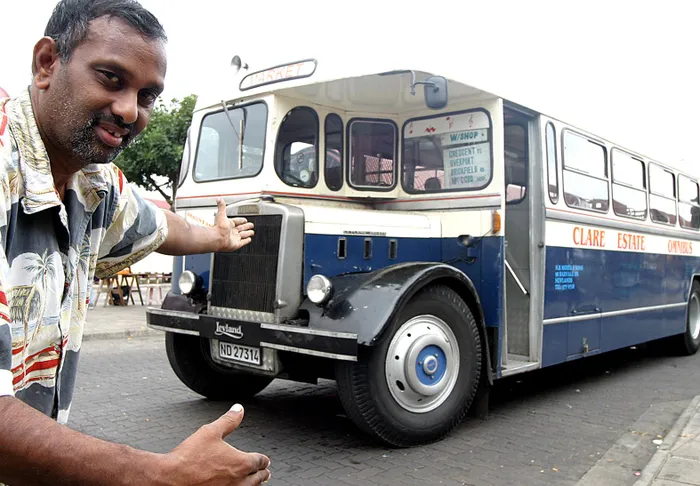
The late Sadasivan Moses posed for a picture during a drive-through the Durban CBD in 1997. His wish was to preserve the bus.
Image: Zanele Zulu
From humble beginnings, bus owners saw it as a business and a source of income. Employees saw buses as a job. Passengers saw them differently. Enthusiasts could not stop admiring them.
Arguably, two of South Africa’s biggest and most prominent non-subsidised bus companies emerged from Phoenix. Love them or despise them, Phoenix buses made Durban “jump”.
The bus companies were: Springfield Omnibus Services/ Springfield Safari Tours (SOS); Mayville Bus Service/Transbux (MBS); and Mayville Safari Tours/Mayville Coach Lines (MCL).
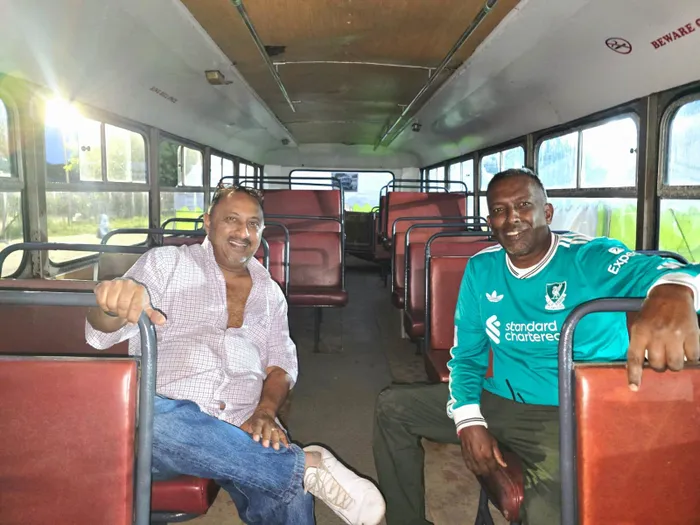
Signwriters Jeenesh Udit, left, and Roshan Mewlal inside the Leyland OPS bus. They still give the buses a stylish look.
Image: SUPPLIED
QUOTE:
“At one point I could remember every single SOS bus from #1 to #81, their shape, their make, etc. It was a magical time. I had an amazing fascination for the buses from school days. Each bus has its own identity. Passengers want to travel on something unique as well. A bus needs to have a name. It needs to have style, finesse and class. Everyone wants to be where there is a party; and on all Durban buses there is a party all the time. We have a huge fan club out there. ”
Jeenesh Lalz Udit-Signwriter
Although the bus company name was emblazoned on the side and back of the bus, the front windscreen was always an option for the driver to give the bus its true name.
Most of the buses looked identical to one another because of their bodies. The only differentiation would be what the driver did to the bus to make it stand out.
Phoenix bus drivers had followed the tradition of naming a bus to grab the attention of the commuters. Some of these buses became household names in Phoenix and the general Durban bus fraternity. Buses were named after the driver’s children, movies, musicians, engine parts and songs. One of the flip sides to the word "man" in the names, was the engine, "M.A.N".
Some of the names were: Thundercat, Rambo, The Outsider, Sweet 16, Sweet Rosanna, Jenny 2, Street Sweeper, Timing Man, Mama Africa, Running with the Pack, Desert Storm, Ricochet, Spiderman, Italian Playboy, Russian Playboy, German Convict, Rambo, Blood Brothers, Grand Master, Spaceman, Space Shuttle, Spacecraft, Night Shift, Hunting for Love, Wanted Man, Superman, German Attacker, Kung Fu Panda, Big Boy, Big Daddy, Big Show Danny, Chennai Express, SOS Challenger, Dusty Springfield, Talk of the Town, Faithful Flight, Rapid Fire, and Hasha Mzambane.
In the early days of the Phoenix housing schemes, roads were referred to by numbers, and not names.
Each unit consisted of a main spine road dissecting it, and there were interleading roads off it. These main roads were designed so that people could walk to the bus stops. Only those living in Phoenix understood which routes the buses were destined for. Bus destination boards and windscreens were emblazoned with numbers on them, for instance, the digits 4 – 5 or 7 – 8 – 9.
Bus rank conversations sounded like: “I am vying to the 10’s or I am getting off at the 7’s.” Bus conductors were particularly intelligent in knowing road names, street corners, pathways and general visuals of the various descriptions of bus stops.
SIDEBAR:
An anecdote of the speech delivered by SJM Steyn, the former minister of Indian Affairs, Community Development and Tourism at the official opening of Phoenix on March 5, 1976.
Source: Fiat Lux magazine, March/April 1976. Page 3.
In the beginning, the Indian pioneers suffered hardships and knew what poverty was. They have, however, identified themselves with the weal and woe of their new fatherland; and they have displayed a tenacity to survive and to succeed in no way less audacious than the boldest effort of compatriot pioneers of other sectors of the community. The three South African cities developed are Phoenix, Mitchells Plain and Atlantis.
The internal road system circulates through the town and will give a good distributor service throughout the area, providing adequate routes for the workers’ bus commuting service to and from Durban City.