

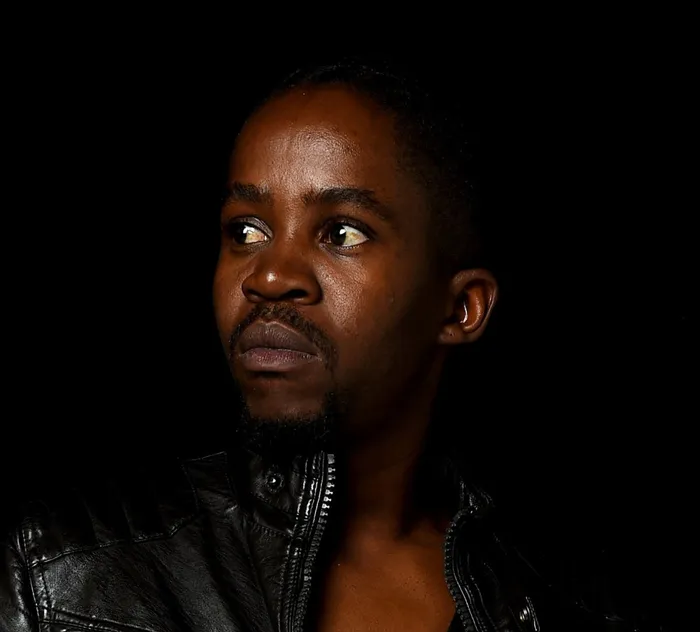
Rabbie Serumula, author, award-winning poet, journalist.
Image: File
South Africa’s most unsettling news rarely arrives with sirens anymore. It comes in parliamentary briefings, leaked testimonies and careful statements that land softly but bruise deeply.
This week, we were told, without much drama, that criminal cartels may have hollowed out parts of our police service.
Almost in the same breath, the taxi industry announced technology to stop drunk drivers before they turn the key. And somewhere between those two headlines, a political party fractured quietly, again.
Chaos aside, this moment is defined by contradiction.
The allegation that police officers in Gauteng may be working for criminal cartels is not scandalous anymore; it is a philosophical rupture. The state’s monopoly on force collapses the moment that force is subcontracted to criminal interests. Law enforcement becomes theatre. What makes this moment especially dangerous is not the claim itself, but how little shock it provokes.
We have grown accustomed to rot at the edges. This time, the suggestion is that the edges may no longer exist.
Against this backdrop, the taxi industry’s announcement lands with unexpected weight. Santaco’s plan to roll out breathalyser systems preventing vehicles from starting if drivers are intoxicated has been framed as a bold step toward road safety. South Africa buries thousands every year because of reckless driving; any attempt to interrupt the chain of tragedy deserves attention.
But attention is not the same as applause.What makes the intervention curious is not what it addresses, but what it leaves untouched. South Africans do not routinely read about drunk taxi drivers. What we read about, relentlessly, are unroadworthy vehicles: failing brakes, worn tyres, overloading, engines coughing their last breath into commuter lungs. The violence of our roads is mechanical, structural and visible.
And yet the industry’s most ambitious technological fix targets a problem that barely registers in the public imagination.
This raises uncomfortable questions. Is drunken driving truly the sector’s most urgent risk, or simply its most quantifiable one? Is this about safety, or about signalling responsibility in a way that is technologically neat and politically legible?
And, inevitably, where is the money coming from? Breathalyser systems are not cheap. Someone will pay: drivers, associations, commuters, or partners whose interests extend beyond public safety. Ambition without transparency does not inspire confidence; it breeds suspicion.
Still, it would be dishonest to dismiss the move outright. There is something quietly radical about an industry choosing to regulate itself in a country where restraint is often enforced only after funerals. The question is whether this marks the beginning of deeper accountability or the end of a carefully managed conversation.
Then comes politics. Dion George’s exit from the Democratic Alliance is, on one hand, an internal squabble; on the other, a revealing symptom. Parties that promise governance increasingly struggle to govern themselves. Capture, it seems, is no longer confined to the state. It has seeped into the architecture of opposition, too.
And so the contradictions converge. Police accused of serving cartels. Politics splintering inward. And a widely criticised industry stepping, cautiously, into a role it was never meant to play. When accountability migrates from institutions to improvisation, the danger is not collapse, but normalisation. A country can survive disorder. What it cannot survive is normalising the absence of a trustworthy authority.