

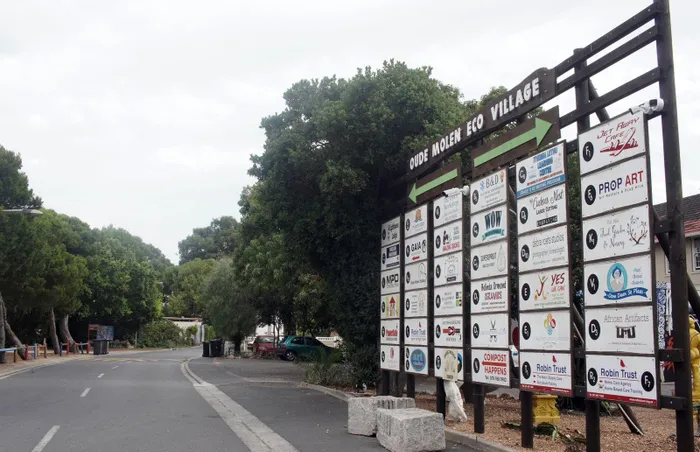
The Oude Molen Eco Village is home to over 40 businesses
Image: Ian Landsberg
The historic Oude Molen Eco Village, located on the outskirts of Cape Town’s central business district, has long been recognised as a unique community hub that combines healthcare support, education, environmental conservation and small business development within a heritage rich landscape.
The site has evolved over decades into a multi functional village where approximately 40 businesses and organisations operate, collectively providing services to thousands of people each year.
These include vulnerable patients receiving therapeutic support, learners attending alternative education programmes, tourists seeking eco tourism experiences and community members accessing recreational and social services.
Among the longest established organisations at the eco village is the Robin Trust, a non profit healthcare provider that has operated from the site for more than three decades.
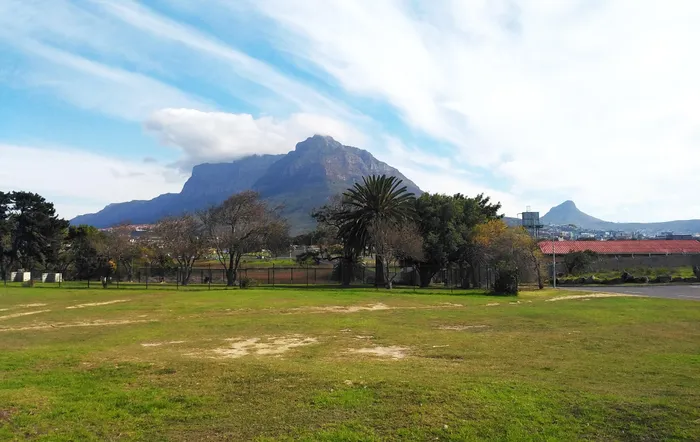
The Oude Molen Eco Village has picturesque mountain views.
Image: Wesley Ford
The trust provides residential and home based care for elderly and vulnerable patients, including specialised dementia and Alzheimer’s care, as well as training programmes for caregivers.
Education has also formed a central pillar of the eco village’s identity. Gaia Waldorf School has operated from the site for close to 25 years, offering alternative education programmes while hosting international visitors and trainee teachers.
A Montessori school also operates from the precinct, further contributing to the village’s focus on diverse learning environments.
Therapeutic programmes linked to horticulture and animal assisted care have become defining features of the eco village. The Oude Molen Food Garden and horse stables work closely with healthcare institutions, including Valkenberg Psychiatric Hospital and non-governmental organisations linked to Alexandra Hospital.
These programmes provide alternative therapy opportunities focused on gardening, animal care and social reintegration.
The site also supports eco tourism initiatives, including backpacker accommodation, organic produce sales, artisan businesses, coffee shops and recreational activities, creating long term employment opportunities for local residents and visitors from surrounding communities.
Beyond its social and economic contribution, Oude Molen Eco Village holds significant historical and cultural importance. The land forms part of the historical footprint of Valkenberg Hospital, one of South Africa’s oldest psychiatric institutions.
Several buildings and archaeological features within the precinct date back centuries.
Historical records indicate that Zulu King Cetshwayo was imprisoned on the land, adding to the site’s liberation heritage significance.
Documentation linked to Khoi and San cultural heritage associated with the land has also formed part of heritage impact considerations and public objections to development proposals in the broader area.
Environmental advocates have highlighted the eco village’s role as one of the few remaining accessible green spaces near Cape Town’s urban core.
The area supports small but important biodiversity ecosystems and provides opportunities for residents and visitors to engage with nature within the city environment.
The eco village also forms part of a broader network of heritage and environmental sites located near the Two Rivers Urban Park, which has been the focus of ongoing development debates in recent years.
Large scale developments in neighbouring areas have raised questions about balancing economic growth with environmental preservation, heritage protection and social services.
Community stakeholders have argued that Oude Molen represents a rare example of integrated social development, combining healthcare, education, environmental conservation and economic empowerment within a single accessible precinct.
As discussions around potential redevelopment continue, heritage groups, tenants and community organisations have called for careful consideration of the site’s historical, environmental and social value.
They argue that any future planning should balance infrastructure development with the preservation of heritage resources and the protection of long standing community services that currently operate within the eco village.